
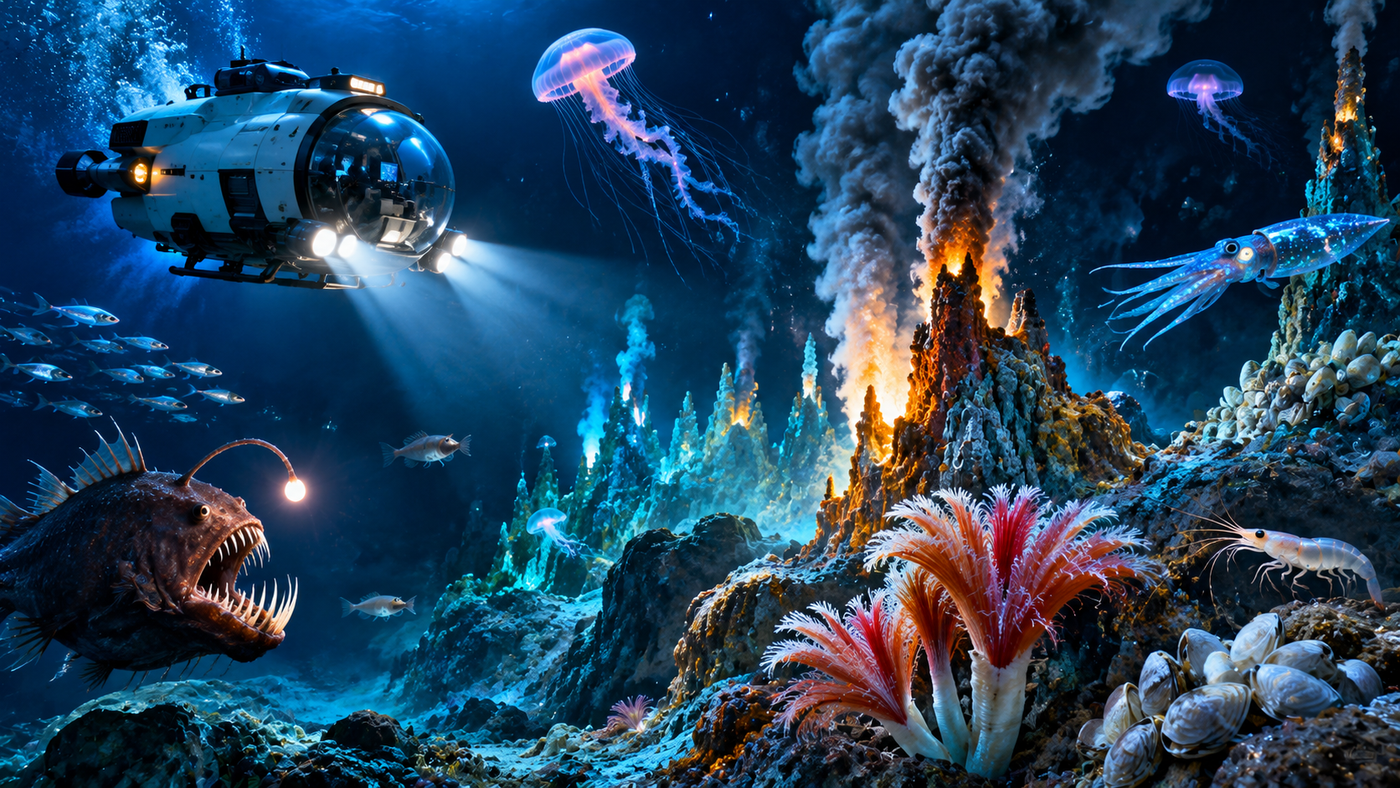
The ocean covers more than 70 percent of Earth’s surface, yet much of its deepest environment remains unexplored. Beneath the sunlit waters familiar to most people lies an extraordinary world of darkness, extreme pressure, unusual geological formations, and remarkable living organisms. Far below the surface, where sunlight cannot reach, marine life has developed surprising adaptations that allow it to survive under conditions very different from those found on land.
Scientists have spent decades exploring these mysterious environments using advanced underwater vehicles, remote sensing technology, and specialized scientific equipment. Their discoveries reveal that the deep ocean is not an empty wilderness but a complex collection of ecosystems that contribute to Earth’s biological diversity and environmental processes.
Understanding the Different Layers of the Ocean
The ocean is divided into several depth zones based on sunlight availability, temperature, and environmental conditions.
The uppermost region, known as the sunlight zone, extends to approximately 200 meters below the surface.
This layer receives enough sunlight to support photosynthesis, allowing microscopic algae and other organisms to produce energy from sunlight.
Below this region lies the twilight zone, where light gradually decreases and becomes insufficient for most photosynthesis.
At greater depths, the ocean enters regions of nearly complete darkness.
The midnight zone extends from approximately 1,000 to 4,000 meters below the surface.
Even deeper regions include the abyssal zone and the hadal zone, which encompasses the deepest ocean trenches.
Each environment presents different challenges for marine organisms.
Life in a World Without Sunlight
Most ecosystems on Earth’s surface depend directly or indirectly on energy captured through photosynthesis.
However, deep-ocean environments demonstrate that life can survive without direct access to sunlight.
Many deep-sea organisms depend on organic material sinking from the upper ocean.
This material includes dead plankton, microscopic particles, and other biological debris.
Scientists sometimes refer to this continuous downward movement of organic matter as marine snow.
As these particles descend, they provide food for organisms living at different depths.
Other deep-sea ecosystems rely on chemical energy produced through geological processes.
These alternative energy sources support biological communities in environments where sunlight is completely absent.
The Discovery of Hydrothermal Vents
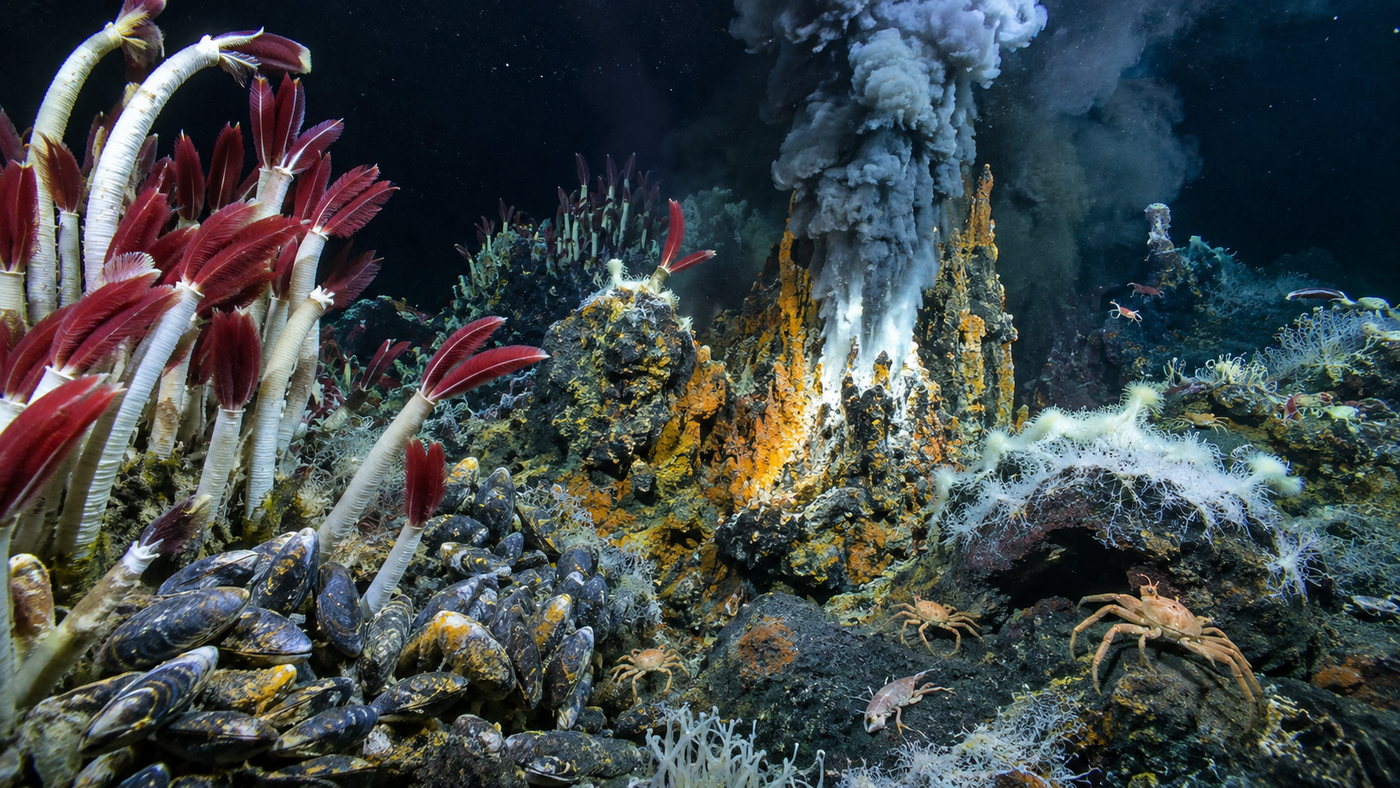
One of the most important discoveries in deep-ocean science occurred in 1977, when researchers identified hydrothermal vents near the Galápagos Islands.
These underwater formations release heated, mineral-rich fluids from beneath the ocean floor.
Hydrothermal vents typically occur in regions where geological activity allows seawater to interact with hot rocks beneath Earth’s crust.
The heated water carries dissolved minerals and chemical compounds into the surrounding ocean.
When these fluids encounter cold seawater, minerals may precipitate and form chimney-like structures.
Some hydrothermal vents support dense biological communities despite the complete absence of sunlight.
These discoveries transformed scientific understanding of where and how life can exist.
How Chemosynthesis Supports Deep-Sea Ecosystems
At hydrothermal vents, certain microorganisms obtain energy through chemical reactions rather than sunlight.
This process is known as chemosynthesis.
Some bacteria and archaea use chemical compounds such as hydrogen sulfide to obtain energy and produce organic material.
These microorganisms form the foundation of specialized food webs.
Certain deep-sea animals maintain close relationships with chemosynthetic bacteria.
Giant tube worms, for example, contain symbiotic bacteria that provide nutrients through chemical processes.
Other organisms, including mussels and clams, may also depend on microbial partnerships.
These relationships demonstrate how life can develop around energy sources that differ fundamentally from those supporting most surface ecosystems.
The Extraordinary Adaptations of Deep-Sea Creatures
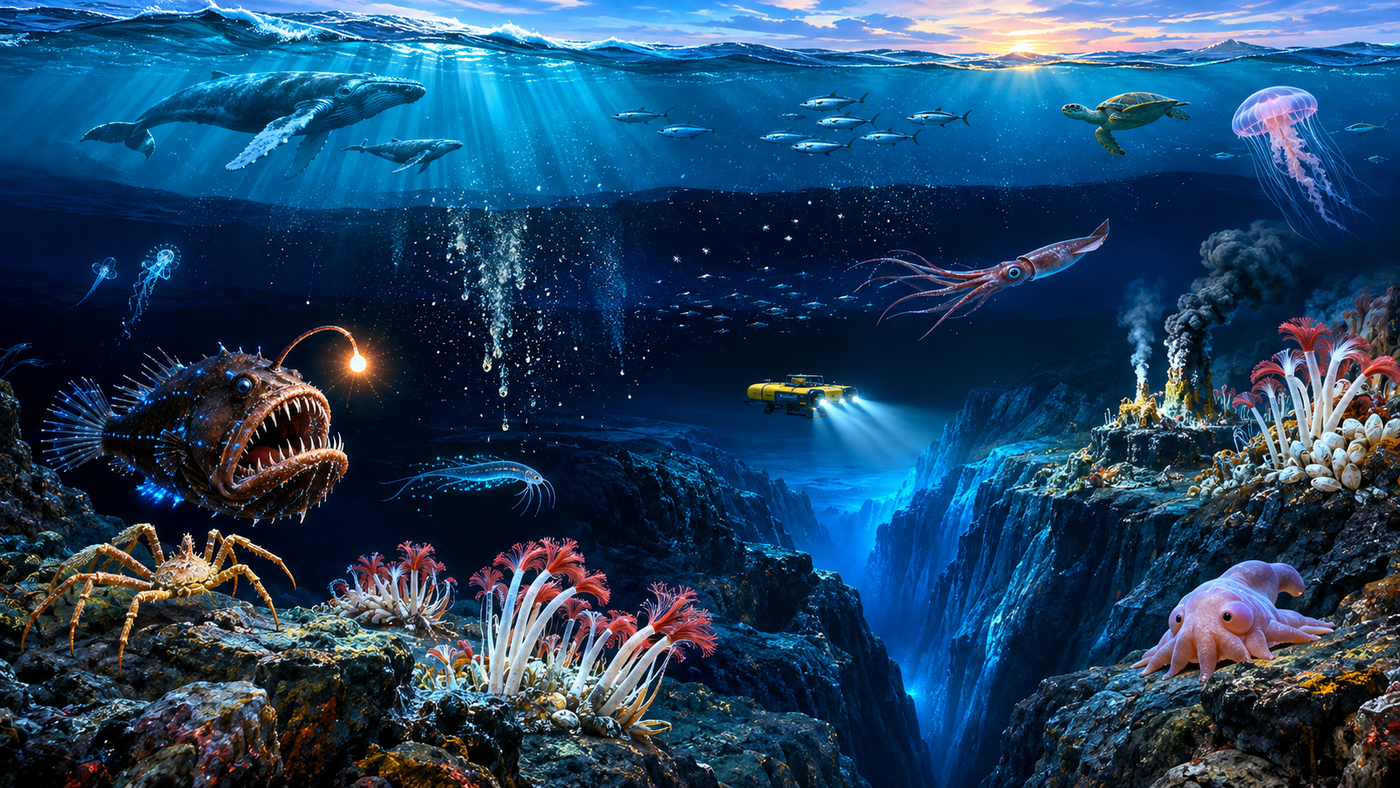
Living in the deep ocean requires specialized adaptations.
Water pressure increases significantly with depth, while temperatures are often extremely low.
Food can also be scarce and unpredictable.
Some deep-sea fish possess flexible bodies and biological structures suited to high-pressure environments.
Others have developed unusually large mouths or expandable stomachs that allow them to consume relatively large prey when food becomes available.
Certain species have reduced eyes, while others possess highly sensitive visual systems adapted to detecting extremely faint light.
These characteristics reflect evolutionary responses to environmental conditions found far beneath the ocean surface.
The Fascinating Science of Bioluminescence
One of the most remarkable features of deep-sea life is bioluminescence.
This is the ability of living organisms to produce light through chemical reactions.
Bioluminescence occurs in various marine organisms, including jellyfish, squid, crustaceans, and fish.
Some species use light to attract prey, while others produce flashes that may confuse predators.
Certain organisms use glowing patterns to communicate or recognize members of their own species.
Anglerfish are particularly well known for possessing specialized structures that can emit light and attract potential prey.
Bioluminescence demonstrates how organisms have adapted to environments where natural sunlight is unavailable.
Exploring the Deepest Ocean Trenches
Ocean trenches represent some of the most extreme environments on Earth.
The Mariana Trench in the western Pacific Ocean contains Challenger Deep, the deepest known point in the world’s oceans.
Its depth reaches approximately 11 kilometers below sea level.
At these depths, water pressure is more than a thousand times greater than atmospheric pressure at the surface.
Despite these conditions, scientific expeditions have documented organisms capable of surviving in deep trench environments.
Specialized microorganisms, amphipods, and other animals inhabit certain regions of the hadal zone.
Studying these organisms helps scientists understand how biological systems function under extraordinary physical conditions.
The Technology Used to Explore the Deep Ocean
Deep-ocean exploration requires equipment capable of operating under enormous pressure and in complete darkness.
Remotely operated vehicles allow scientists to observe underwater environments while controlling equipment from research vessels.
Autonomous underwater vehicles can travel along programmed routes, collecting information about ocean conditions and seafloor geography.
Advanced sonar systems help researchers map underwater mountains, trenches, and geological formations.
Specialized cameras and sampling instruments provide information about marine organisms and their habitats.
These technologies have greatly expanded scientific access to environments that were previously almost impossible to investigate.
Why Deep-Ocean Ecosystems Matter
Deep-ocean ecosystems contribute to the functioning of Earth’s environmental systems.
Marine organisms participate in nutrient cycling and the movement of carbon through ocean waters and sediments.
Deep-sea habitats also support biological diversity, including species that remain poorly understood.
Scientists are investigating how ocean warming, pollution, and human activities may influence these environments.
Deep-sea mining proposals have raised questions about the potential disturbance of habitats that may recover very slowly from physical damage.
Understanding these ecosystems is therefore important for developing responsible approaches to ocean conservation.
The Future of Deep-Ocean Discovery
Despite decades of scientific exploration, researchers have directly observed only a small portion of the deep seafloor.
Many underwater landscapes and biological communities remain poorly documented.
Future advances in robotic exploration, imaging technology, and environmental monitoring may reveal additional species and geological formations.
Researchers are also interested in studying deep-ocean microorganisms because their unusual biological processes may provide insights into biotechnology and the evolution of life.
International scientific cooperation will remain important for exploring these environments while minimizing ecological disturbance.
Discovering the Importance of Earth’s Hidden Ocean
The deep ocean represents one of the planet’s greatest remaining frontiers of scientific discovery.
Its extraordinary environments demonstrate that life can adapt to darkness, pressure, limited food supplies, and unusual chemical conditions.
From glowing marine organisms to ecosystems supported by hydrothermal vents, deep-sea discoveries continue to expand our understanding of biology and geology.
Exploring these environments also reminds us how much remains unknown about the planet we inhabit.
As scientific technology advances, researchers will continue revealing the remarkable diversity hidden beneath the ocean’s surface.
Ultimately, the deep ocean is more than a mysterious region of darkness. It is an essential part of Earth’s natural environment, containing valuable scientific knowledge and ecosystems that deserve careful study and protection.
