
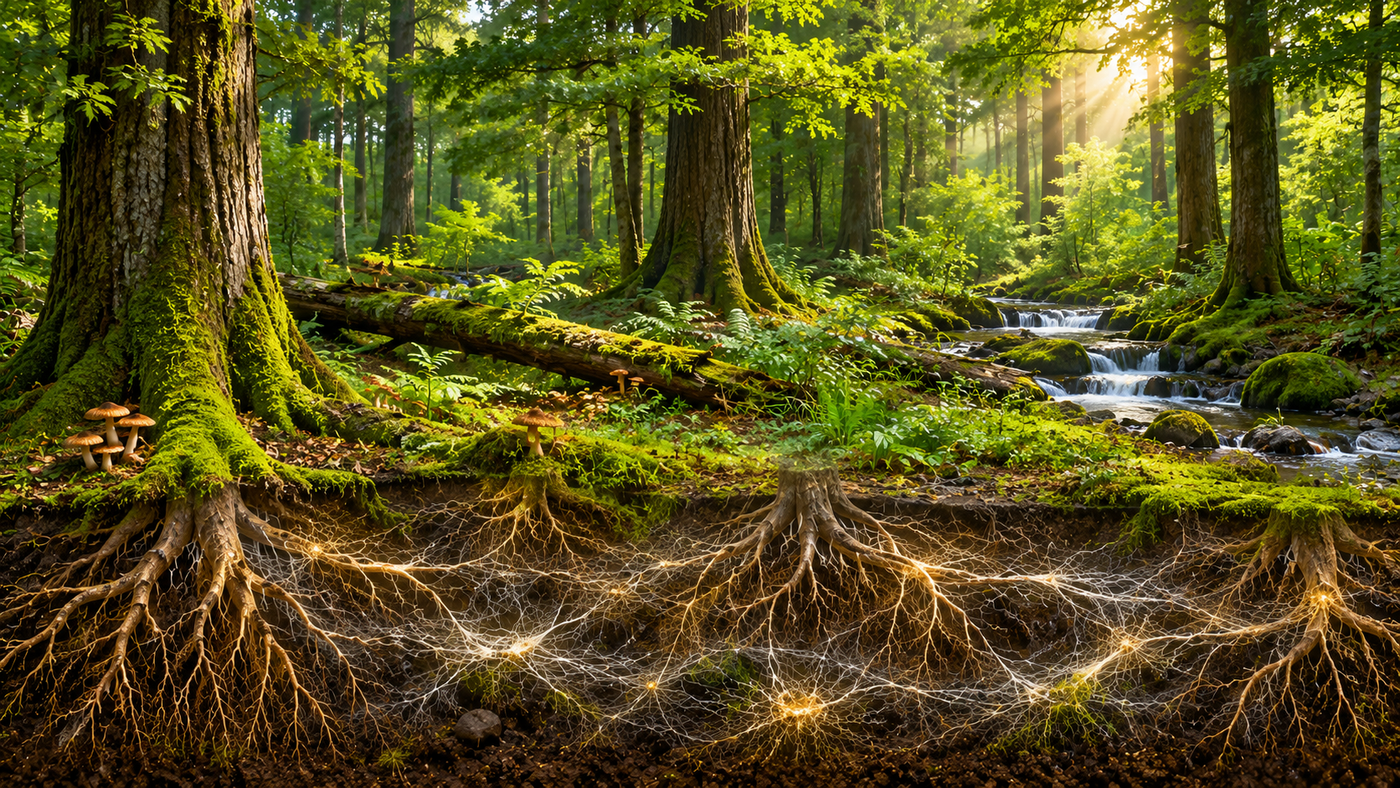
Forests are among the most complex ecosystems on Earth, supporting countless species of plants, animals, fungi, and microorganisms. While towering trees and green canopies attract most of our attention, an equally fascinating world exists beneath the forest floor. Hidden among soil particles, roots, and decaying organic matter are extensive networks of fungi that connect with trees and influence how forest ecosystems function.
Scientists have spent decades investigating these underground relationships, discovering that trees interact with their surroundings in ways that are far more complex than previously understood. Through partnerships with fungi, trees can obtain essential nutrients, exchange resources, and respond to environmental conditions. These discoveries are changing how researchers understand forest ecology and the interconnected nature of life beneath the ground.
The Hidden World Beneath the Forest Floor
When walking through a forest, most people notice the trees, leaves, and plants growing above the soil.
However, a substantial portion of forest activity takes place underground.
Tree roots extend through the soil, absorbing water and nutrients while interacting with microorganisms.
Among the most important organisms in this environment are mycorrhizal fungi.
These fungi form relationships with plant roots, creating connections that benefit both organisms under suitable conditions.
The fungi receive carbon compounds produced by trees through photosynthesis.
In return, they help plants obtain nutrients such as phosphorus and nitrogen from the surrounding soil.
This partnership has existed for hundreds of millions of years and plays an important role in the functioning of terrestrial ecosystems.
Understanding Mycorrhizal Networks
Mycorrhizal fungi produce thin, threadlike structures called hyphae.
These structures extend through the soil and can connect with the roots of multiple plants.
Together, they form underground networks that researchers sometimes describe as common mycorrhizal networks.
Such networks may create pathways through which nutrients and carbon compounds can move between connected plants.
However, the extent and ecological significance of these transfers vary depending on the fungal species, plant species, soil conditions, and environmental circumstances.
Scientists continue studying how these networks develop and how they influence relationships between neighboring trees.
Although popular descriptions sometimes compare them to an underground internet, the analogy is imperfect.
These networks are biological partnerships rather than communication systems operating with conscious intentions.
How Trees Exchange Resources
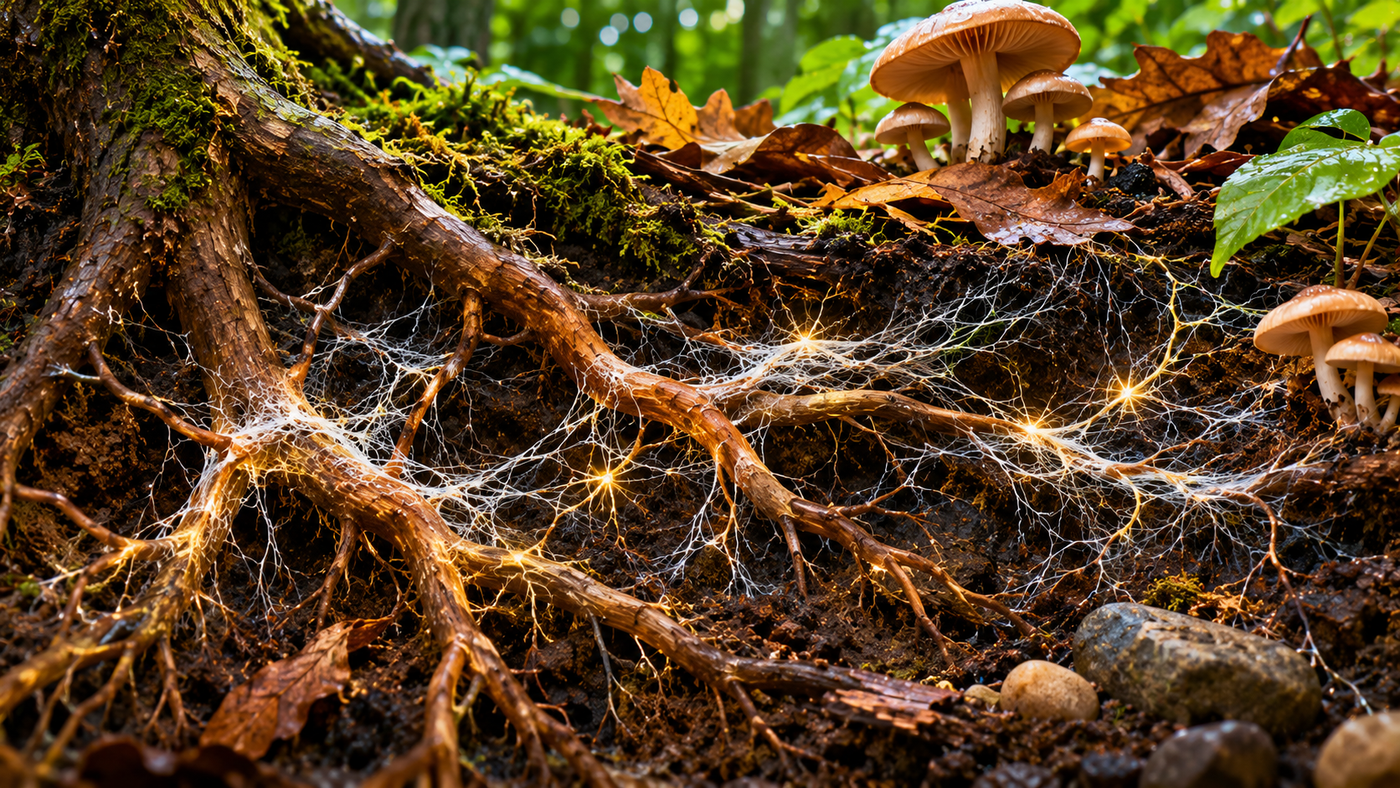
One of the most interesting questions in forest ecology concerns whether trees can transfer resources to neighboring plants through fungal connections.
Experimental studies have demonstrated that carbon and other substances can move between plants under certain conditions.
For example, researchers have used specialized carbon isotopes to investigate how carbon moves through forest ecosystems.
Some experiments suggest that fungal connections can contribute to these transfers.
However, scientists are still examining how frequently such exchanges occur in natural forests and whether they consistently provide meaningful benefits to receiving trees.
Resource movement may also occur through other pathways, including soil processes and interactions between roots.
Understanding these distinctions is essential for accurately describing the role of underground fungal networks.
The Relationship Between Trees and Fungi
The partnership between trees and mycorrhizal fungi is an example of symbiosis.
Trees produce sugars through photosynthesis, using sunlight to convert carbon dioxide and water into energy-rich compounds.
Some of these compounds are transported to the roots, where they can support fungal partners.
Fungi possess extensive networks of hyphae that can explore soil spaces beyond the reach of individual roots.
This allows them to access nutrients that might otherwise be difficult for trees to obtain.
Different fungal species specialize in different environmental conditions and nutrient acquisition strategies.
Some forests contain hundreds of fungal species interacting with a wide variety of plants.
These relationships contribute to soil fertility, nutrient cycling, and the overall productivity of forest ecosystems.
Can Trees Warn One Another About Danger?
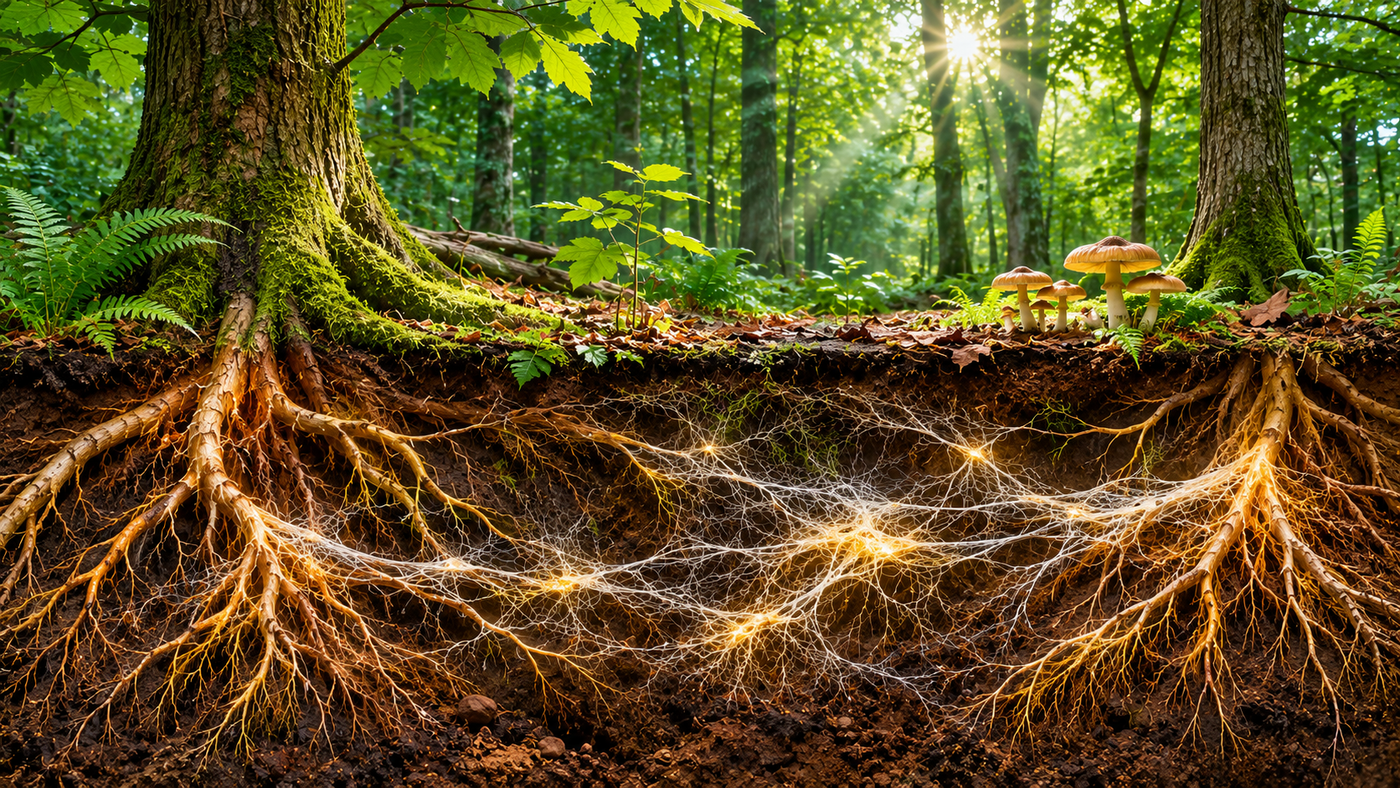
The idea that trees can communicate warnings through underground networks has attracted considerable public attention.
Some experiments have explored whether plants exposed to insects or other stressors can influence the defensive responses of nearby plants.
Researchers have investigated several possible mechanisms, including airborne chemical signals, root interactions, and fungal connections.
Under certain experimental conditions, neighboring plants may show changes in defensive chemistry.
However, scientists remain cautious about interpreting these responses as intentional warnings.
It is often difficult to determine whether changes result specifically from fungal networks or from other environmental signals.
The research nevertheless demonstrates that plants respond dynamically to their surroundings and can influence neighboring organisms through complex ecological processes.
The Importance of Older Trees in Forest Ecosystems
Large, mature trees contribute significantly to forest environments.
Their extensive root systems interact with diverse soil organisms, while their canopies provide habitats for birds, insects, and other wildlife.
Older trees also store substantial quantities of carbon and contribute organic matter through falling leaves, branches, and roots.
Some researchers have investigated whether mature trees can influence younger seedlings through shared fungal networks.
Although resource transfers have been observed in certain studies, the idea that older trees routinely nurture younger trees through these connections remains an active subject of scientific debate.
Nevertheless, mature trees play important ecological roles through shading, moisture regulation, nutrient cycling, and habitat creation.
Protecting forests containing trees of different ages can therefore support biodiversity and ecosystem stability.
How Underground Networks Support Forest Health
Healthy forest soils contain diverse communities of fungi, bacteria, insects, and other organisms.
These communities contribute to the decomposition of organic matter and the recycling of nutrients.
Mycorrhizal fungi can improve nutrient acquisition and sometimes help plants tolerate environmental stresses.
Their effectiveness depends on factors such as soil chemistry, moisture, temperature, and the species involved.
Forest disturbances, including intensive soil disruption and certain land-use changes, can alter fungal communities.
Changes in fungal diversity may influence how efficiently nutrients circulate through ecosystems.
Understanding these relationships helps scientists develop more informed approaches to forest conservation and restoration.
The Role of Fungal Networks in Climate Research
Forests play an important role in Earth’s carbon cycle.
Through photosynthesis, trees absorb carbon dioxide and store carbon in their trunks, branches, leaves, and roots.
Some carbon also enters the soil through root growth, organic matter, and interactions with fungi.
Mycorrhizal fungi influence these processes by participating in nutrient cycling and soil carbon dynamics.
Researchers are investigating how changes in temperature, rainfall, and atmospheric carbon dioxide affect fungal communities.
Understanding these interactions may improve predictions about how forests respond to climate change.
However, the relationship between fungal activity and long-term carbon storage is complex and varies among ecosystems.
Protecting the Underground Life of Forests
Forest conservation involves more than protecting visible trees.
The organisms living beneath the soil are essential components of functioning ecosystems.
Sustainable forest management can help protect soil structure, maintain biodiversity, and reduce unnecessary disturbance.
Restoration projects may also consider the importance of native fungi and healthy soil communities when reestablishing vegetation.
Scientists continue developing methods to study underground biodiversity through genetic analysis, soil sampling, and environmental monitoring.
These tools provide increasingly detailed information about organisms that were once difficult to observe.
Discovering the Complexity of Forest Life
The underground world of forests reveals that trees do not exist as isolated organisms.
Their roots interact with fungi, bacteria, neighboring plants, and countless other components of the soil ecosystem.
These relationships influence nutrient availability, plant growth, and environmental stability.
Although many questions about underground networks remain unanswered, scientific research has already demonstrated their importance to forest ecology.
As new technologies improve our ability to study soil ecosystems, researchers will continue discovering how these hidden relationships function.
Ultimately, the remarkable world beneath the forest floor reminds us that nature’s most important processes are not always visible.
The health of a forest depends not only on the trees reaching toward the sky but also on the intricate biological communities living quietly beneath our feet.
