
The world’s oceans cover more than 70 percent of Earth’s surface, yet much of the deep sea remains unexplored. Beneath the familiar blue waters lies an extraordinary environment filled with unusual creatures, towering underwater mountains, mysterious ecosystems, and geological formations that scientists are still working to understand.
For decades, ocean researchers have developed increasingly sophisticated technologies to investigate these hidden environments. Their discoveries continue to reveal how marine organisms survive under extreme conditions and why the deep ocean plays such an important role in maintaining the health of our planet.
A Vast World Beneath the Surface
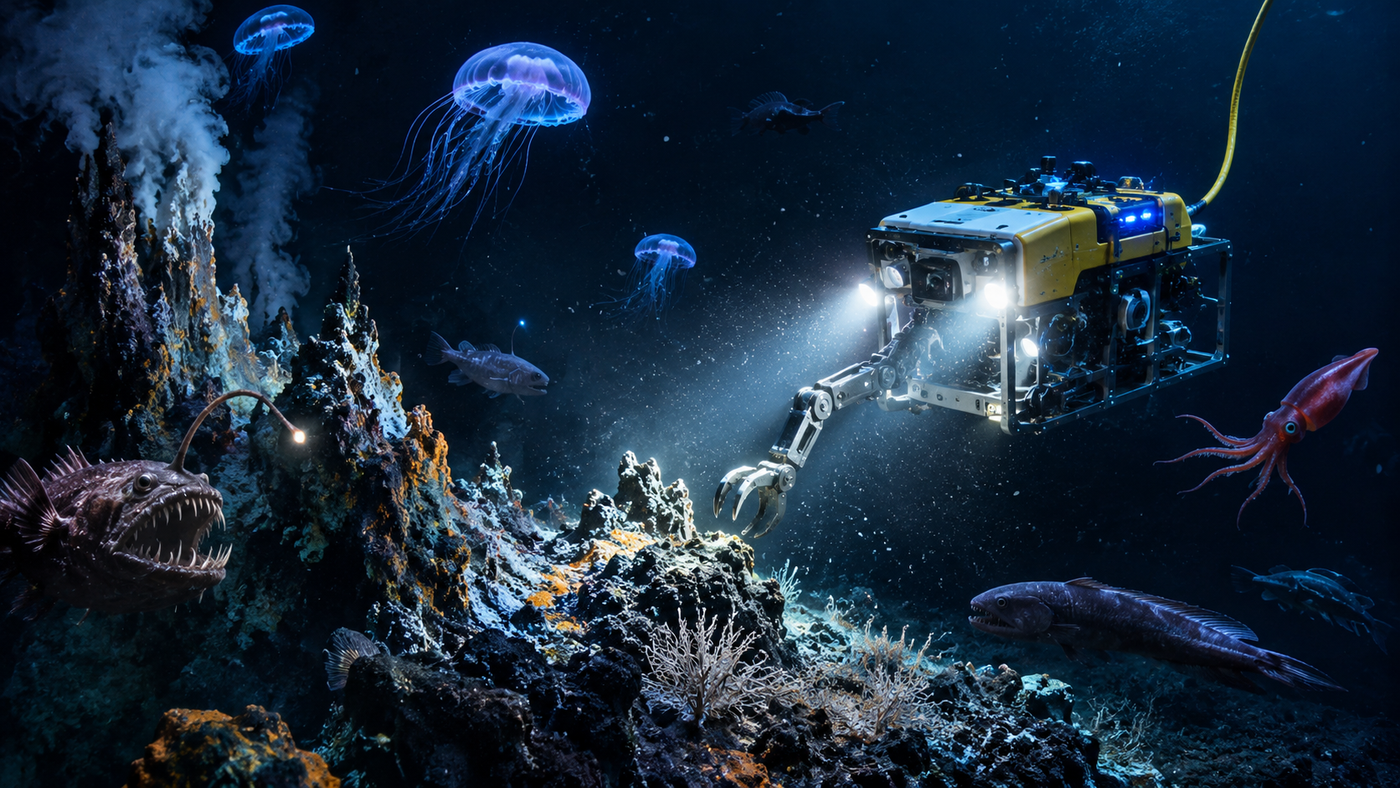
The deep ocean generally begins around 200 meters below the surface, where sunlight becomes increasingly limited. As depth increases, temperatures fall, pressure rises, and the surrounding environment becomes almost completely dark.
At depths greater than 1,000 meters, sunlight is essentially absent, creating a world very different from the shallow coastal waters most people recognize.
Despite these challenging conditions, the deep sea supports an extraordinary variety of organisms.
Fish, crustaceans, jellyfish, mollusks, and countless microscopic creatures have developed remarkable adaptations that allow them to survive in environments that would be inhospitable to most surface-dwelling animals.
Scientists continue to investigate how these ecosystems function, particularly because many deep-sea species have never been formally described.
Every expedition offers the possibility of discovering unfamiliar organisms and previously unknown relationships between marine species.
Extraordinary Creatures Adapted to Darkness
One of the most fascinating aspects of deep-ocean exploration is the discovery of animals with unusual physical characteristics.
Many deep-sea creatures have developed specialized bodies, sensory systems, and feeding strategies suited to their extreme surroundings.
Anglerfish, for example, are known for their distinctive appearance and, in some species, a glowing lure used to attract prey.
Other animals possess enormous mouths, expandable stomachs, or highly sensitive organs that help them locate food in environments where meals may be scarce.
Some deep-sea jellyfish and squid produce their own light through a biological process called bioluminescence.
This natural illumination can serve several purposes, including attracting prey, communicating with other organisms, and confusing predators.
Bioluminescence is particularly widespread in the ocean, demonstrating how marine life has evolved to use light even in environments where sunlight cannot reach.
Discovering Life Around Hydrothermal Vents
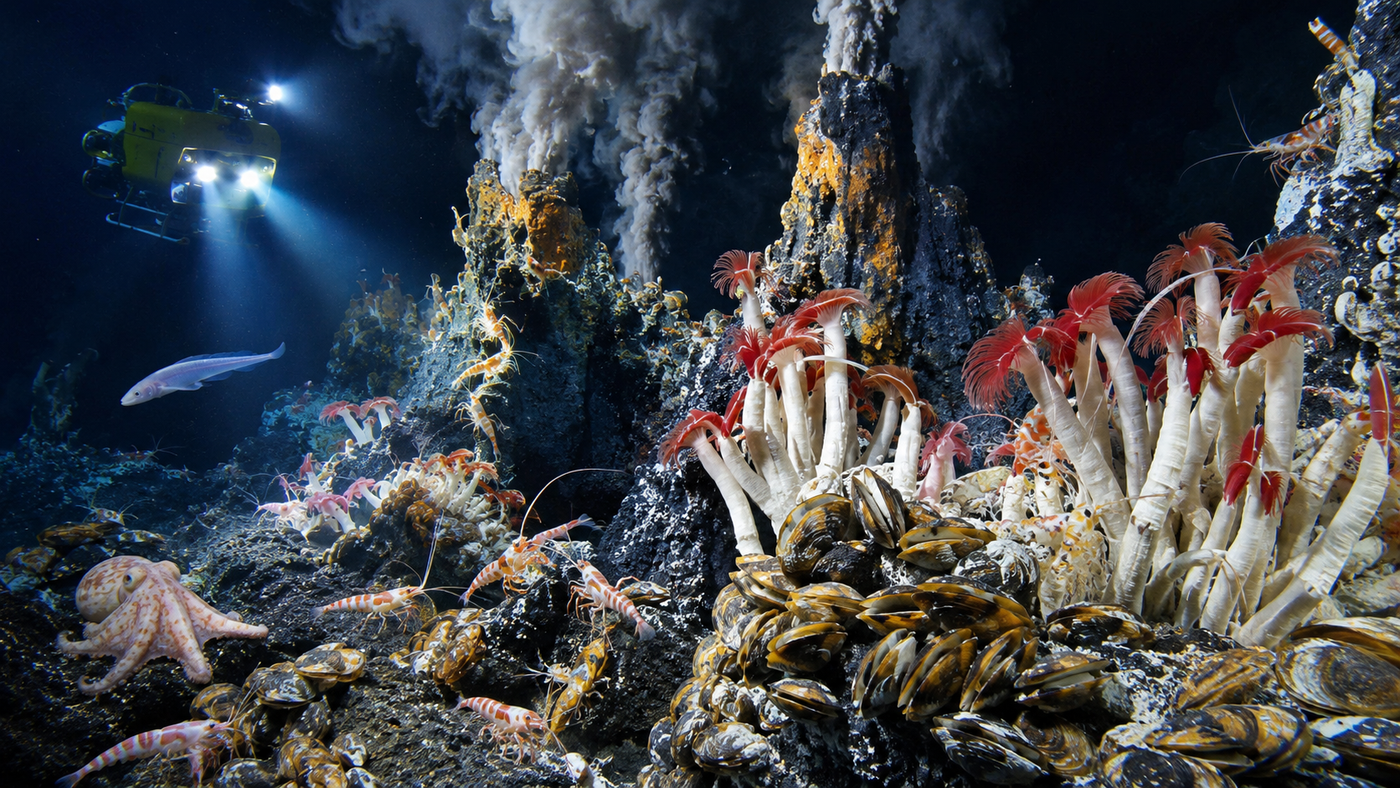
One of the most important discoveries in modern ocean science occurred in 1977, when researchers identified thriving biological communities surrounding hydrothermal vents near the Galápagos Islands.
These underwater formations release heated, mineral-rich fluids from beneath the ocean floor.
The discovery transformed scientific understanding of how ecosystems can obtain energy.
Unlike most surface ecosystems, which depend directly or indirectly on sunlight, hydrothermal vent communities rely on chemical energy.
Specialized microorganisms use compounds such as hydrogen sulfide to produce organic matter through a process known as chemosynthesis.
These microorganisms form the foundation of food webs supporting animals such as giant tube worms, clams, mussels, and certain species of shrimp.
The existence of these communities demonstrates that complex biological systems can survive without sunlight.
Scientists continue studying hydrothermal vents because they provide valuable insights into Earth’s biological diversity and the conditions under which life might exist elsewhere in the universe.
The Role of Underwater Mountains and Deep-Sea Trenches
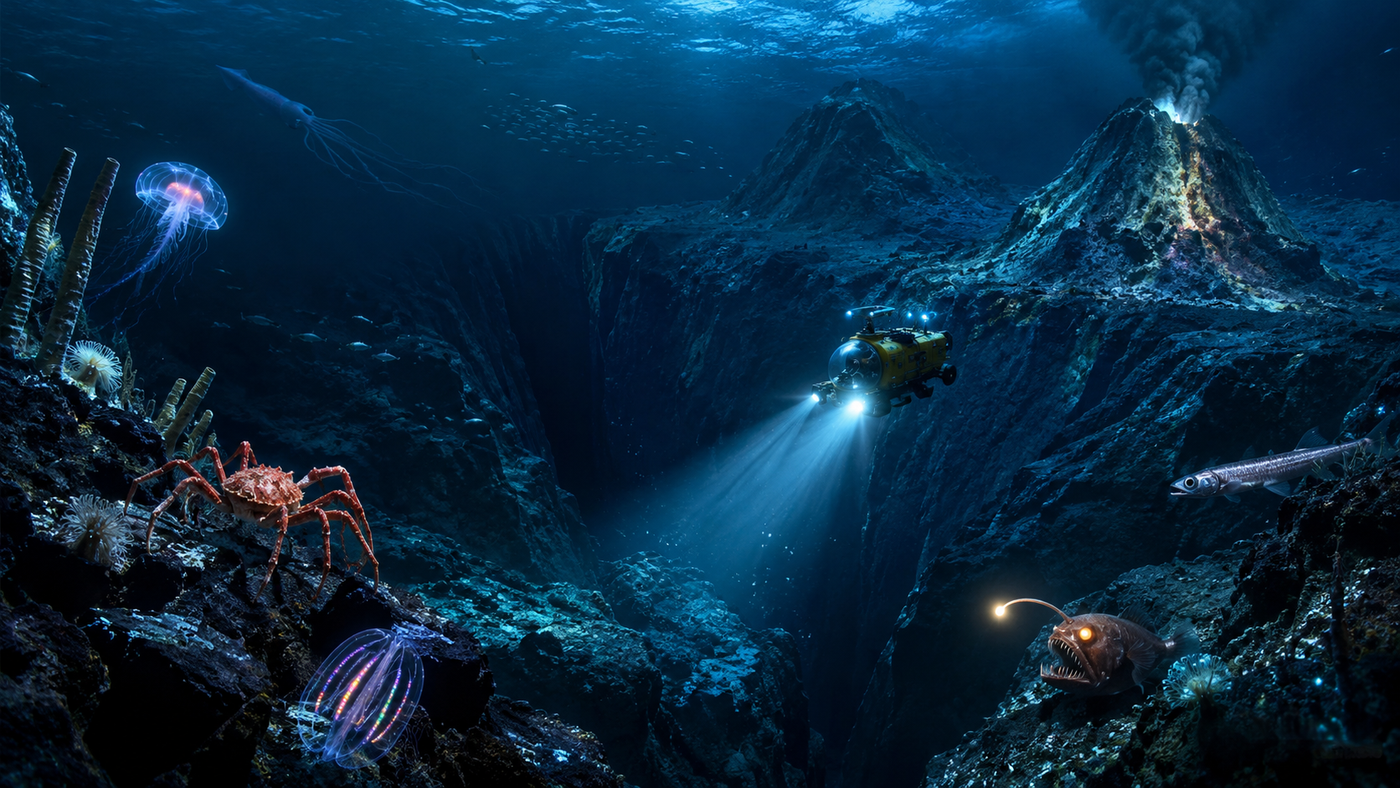
The ocean floor contains geographical features as impressive as those found on land.
Underwater mountain ranges extend across vast distances, while deep trenches descend several kilometers below the surrounding seabed.
The Mariana Trench in the western Pacific Ocean contains the deepest known location in the world’s oceans, Challenger Deep.
Conditions at such extreme depths include enormous water pressure, low temperatures, and complete darkness.
Nevertheless, scientific expeditions have documented organisms capable of surviving in these environments.
Researchers are particularly interested in understanding how deep-sea animals maintain their cellular structures and biological functions under extreme pressure.
Underwater mountains, known as seamounts, are also important ecological environments.
Ocean currents flowing around these formations can concentrate nutrients and support diverse communities of fish, corals, sponges, and other marine organisms.
Studying these habitats helps scientists understand how geography influences marine biodiversity.
How Technology Is Transforming Ocean Exploration
Exploring the deep ocean requires specialized equipment capable of operating under conditions that are dangerous and inaccessible to humans.
Remotely operated vehicles, commonly called ROVs, allow researchers to examine underwater environments using cameras, sensors, and robotic instruments.
These vehicles can collect samples, document marine organisms, and investigate geological formations while being controlled from research vessels.
Autonomous underwater vehicles, or AUVs, can independently survey large areas of the ocean floor.
Modern sonar systems also help scientists produce detailed maps of underwater landscapes.
Advances in underwater photography and environmental DNA analysis are providing additional ways to identify marine species and understand their distribution.
Together, these technologies are expanding scientific knowledge of environments that were once almost impossible to investigate.
Understanding the Ocean’s Influence on Earth’s Climate
Beyond supporting remarkable biodiversity, the deep ocean plays a fundamental role in regulating Earth’s climate.
Ocean waters absorb and redistribute enormous quantities of heat, influencing weather patterns and global temperatures.
The ocean also participates in the global carbon cycle.
Carbon dioxide absorbed at the surface can move into deeper waters through physical circulation and biological processes.
Some marine organisms contribute to this movement when organic particles sink toward the seabed.
Scientists study these processes to understand how the ocean responds to changing atmospheric conditions.
Deep-sea sediments also preserve valuable information about Earth’s environmental history, helping researchers reconstruct past climates and ocean conditions.
Protecting Ecosystems We Are Still Discovering
As scientific knowledge expands, concerns about the protection of deep-sea environments are becoming increasingly important.
Pollution, climate change, fishing activities, and potential seabed mining can threaten vulnerable marine ecosystems.
Many deep-sea organisms grow slowly and inhabit environments where recovery from disturbances may take decades or even centuries.
Because so much remains unknown, researchers emphasize the importance of careful environmental assessments and responsible ocean management.
Protecting these ecosystems requires international cooperation, continued scientific research, and a better understanding of how human activities affect marine habitats.
The Future of Deep-Ocean Discovery
Although scientists have made remarkable progress, the deep ocean remains one of Earth’s greatest frontiers of exploration.
New technologies are allowing researchers to travel farther, observe more accurately, and investigate ecosystems that were previously beyond human reach.
Future expeditions may identify thousands of undescribed species, reveal new geological processes, and improve our understanding of how marine ecosystems respond to environmental change.
The discoveries made beneath the ocean’s surface also remind us how much remains unknown about our own planet.
From glowing creatures in complete darkness to extraordinary communities surrounding underwater volcanic systems, the deep sea continues to challenge scientific expectations.
As exploration advances, understanding and protecting this remarkable environment will remain essential to appreciating the complexity, diversity, and interconnected nature of life on Earth.
