
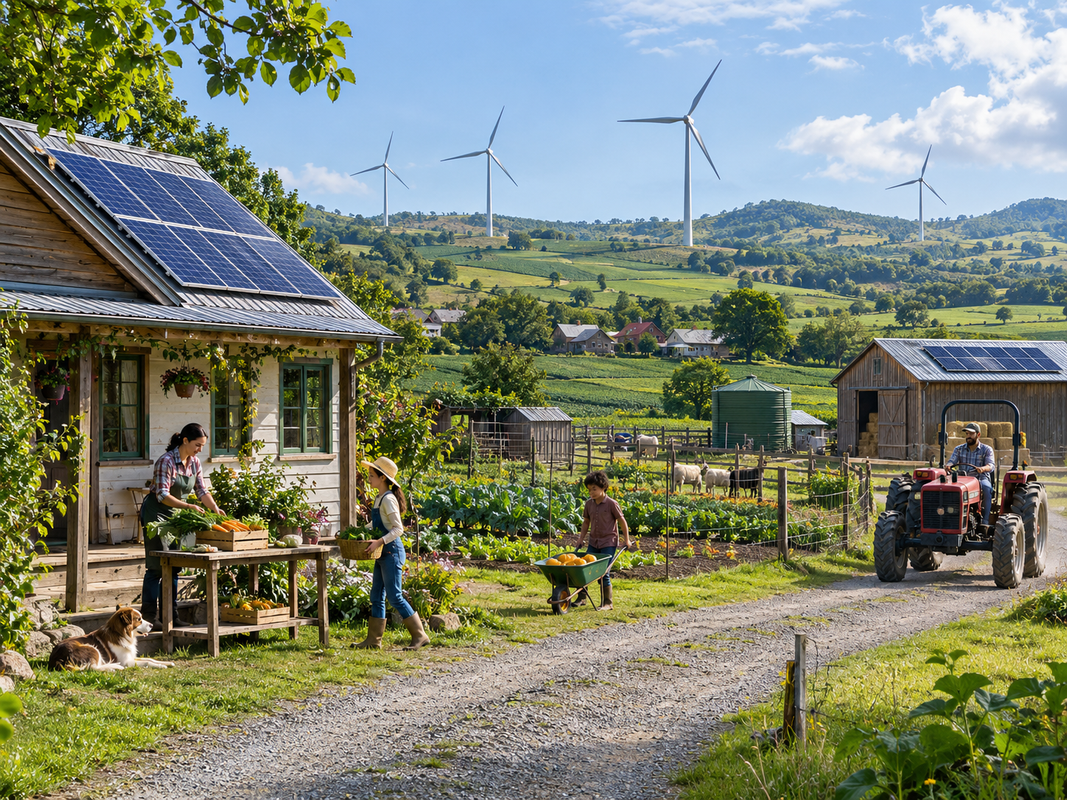
Renewable energy is transforming the way communities produce and consume electricity. While large cities and industrial centers often receive the most attention in discussions about clean energy, smaller towns and rural communities are also becoming important participants in the global energy transition. From solar panels installed on village rooftops to wind turbines operating across agricultural landscapes, renewable technologies are creating new opportunities for local energy production.
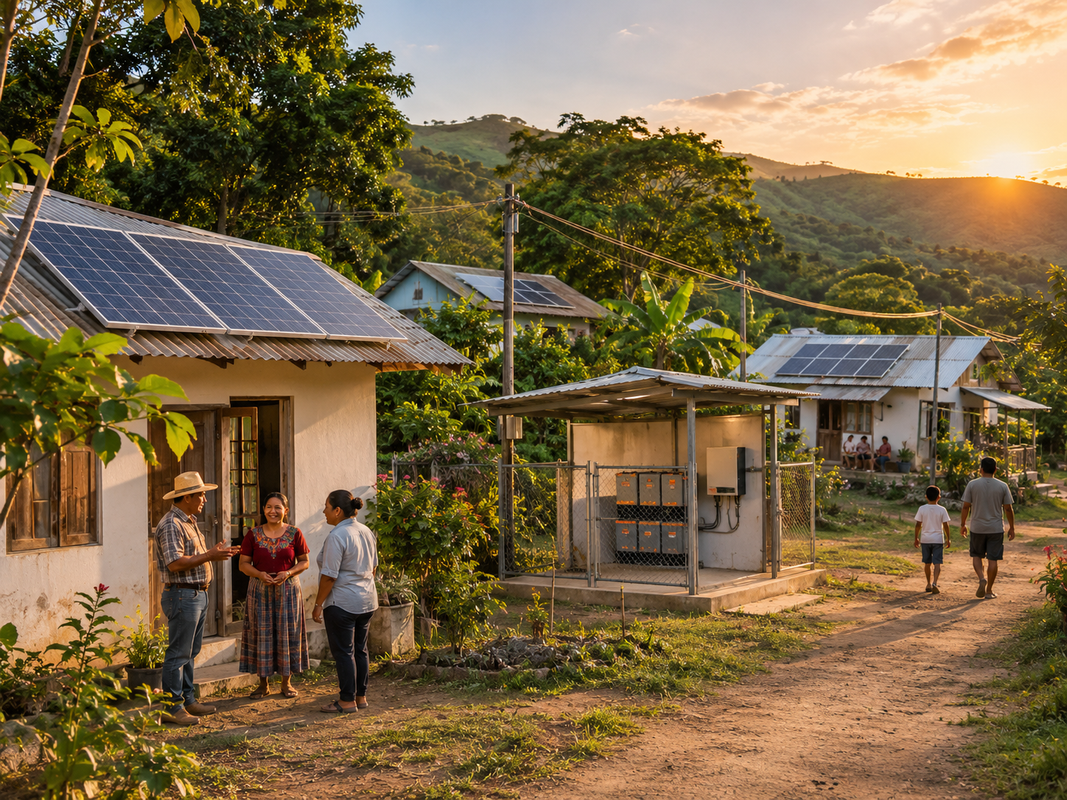
As technology becomes more accessible and communities search for reliable, affordable, and environmentally responsible energy solutions, small-scale renewable projects are gaining attention. These developments demonstrate how local initiatives can contribute to broader efforts to build a more sustainable energy future.
Understanding Renewable Energy at the Community Level
Renewable energy comes from naturally replenishing sources such as sunlight, wind, flowing water, and geothermal heat.
Unlike fossil fuels, which require extracting finite resources from the Earth, renewable energy technologies generate electricity from energy sources that are continually renewed through natural processes.
For small communities, renewable energy offers opportunities to produce electricity closer to where it is consumed.
Community-scale energy systems may include rooftop solar panels, shared solar installations, small wind turbines, micro-hydropower facilities, and battery storage.
These projects vary considerably depending on geography, available resources, electricity demand, and financial conditions.
Some communities connect renewable installations to existing electricity networks, while others develop independent systems designed to serve remote locations.
The growing interest in these approaches reflects a desire for greater energy resilience and more locally controlled infrastructure.
Solar Power Is Expanding Opportunities for Rural Communities
Solar energy has become one of the most widely adopted renewable technologies because of its flexibility and relatively straightforward installation.
Solar photovoltaic panels convert sunlight directly into electricity, allowing buildings and communities to generate power without combustion.
In rural areas, solar systems can provide electricity for homes, schools, clinics, agricultural equipment, and small businesses.
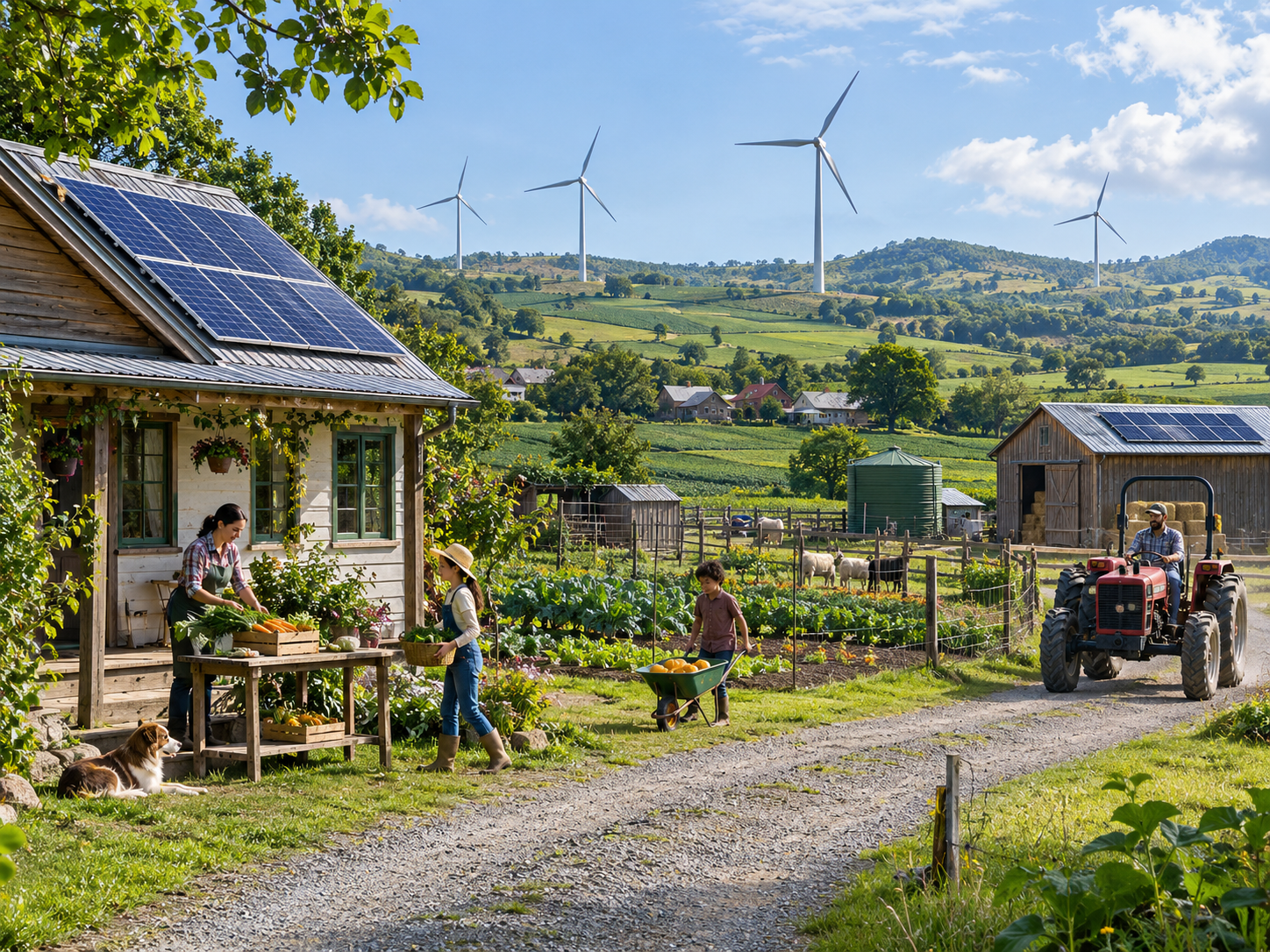
Community solar projects allow multiple households or organizations to benefit from shared installations rather than requiring each participant to install panels independently.
This approach can be particularly useful for residents whose properties are unsuitable for rooftop solar systems.
In regions where electricity networks are limited, solar-powered microgrids can provide an important alternative to traditional infrastructure.
When combined with battery storage, these systems can supply electricity during periods when sunlight is unavailable, although their performance depends on storage capacity and energy demand.
Wind Energy and the Potential of Local Resources
Wind energy represents another opportunity for communities located in areas with suitable weather conditions.
Wind turbines convert the movement of air into electricity through mechanical and electrical systems.
Although large wind farms are commonly associated with national electricity networks, smaller installations can also contribute to local energy production.
Agricultural communities may benefit from wind projects located on farmland, where turbines can operate alongside certain farming activities.
In some regions, community-owned wind projects allow residents to participate financially in energy development.
These arrangements may create opportunities for local investment and shared economic benefits.
However, successful wind energy development requires careful evaluation of wind speeds, turbine performance, installation costs, and potential environmental effects.
Community consultation is also important when determining suitable locations for renewable energy infrastructure.
Small Hydropower and the Value of Local Water Resources
Hydropower has been used for centuries to support mechanical work and electricity generation.
Today, small hydropower systems remain an option for communities with suitable rivers, streams, or existing water infrastructure.
These installations use flowing or falling water to generate electricity.
In mountainous regions, small hydropower facilities can sometimes provide reliable local electricity without requiring the extensive infrastructure associated with large dams.
However, their environmental impact depends on project design and local conditions.
Poorly planned installations can alter river habitats, affect fish movement, and change natural water flows.
Modern small hydropower projects therefore require careful environmental assessment and responsible water management.
When appropriately designed, they can form part of a diversified renewable energy system.
Battery Storage and the Development of Community Microgrids
One of the challenges associated with renewable energy is that electricity generation does not always coincide with demand.
Solar panels generate electricity when sunlight is available, while wind turbines depend on changing wind conditions.
Battery storage systems help address this challenge by storing electricity for later use.
In small communities, batteries can support solar installations, improve local power reliability, and reduce dependence on conventional generators.
Microgrids provide another important technological development.
A microgrid is a localized electricity network that can coordinate different energy sources, storage systems, and electricity consumers.
Some microgrids can operate independently when the main electricity network experiences an interruption.
This capability can be particularly valuable for remote communities and facilities requiring dependable electricity.
Economic Opportunities and Local Development
Renewable energy projects can provide economic benefits beyond electricity generation.
Installing and maintaining energy infrastructure creates opportunities for technical employment and workforce training.
Local businesses may benefit from improved electricity reliability, particularly in regions where power interruptions affect daily operations.
Community ownership models can also allow residents to participate in decisions about energy production and investment.
However, renewable energy projects often require substantial initial financing.
Equipment costs, maintenance requirements, technical expertise, and regulatory conditions can influence whether a project is financially practical.
Access to appropriate funding and long-term planning is therefore essential.
Challenges Facing Small-Scale Renewable Energy
Despite their potential advantages, community renewable energy projects face several obstacles.
Geographical conditions may limit access to suitable sunlight, wind, or water resources.
Some communities lack the technical expertise required to install and maintain advanced energy systems.
Electricity regulations can also make it difficult for small producers to connect to existing networks or receive compensation for surplus electricity.
Another challenge involves ensuring that renewable energy benefits are distributed fairly.
Low-income households may struggle to participate in projects requiring significant upfront investment.
Inclusive financing arrangements and public support can help address these limitations.
Successful initiatives generally require cooperation between residents, local governments, utilities, engineers, and financial organizations.
Building a More Sustainable Energy Future
The future of renewable energy in small communities will depend on continued technological development, supportive policies, and local participation.
Improved battery systems, more efficient solar panels, advanced electricity management tools, and innovative financing models may expand opportunities for community-scale projects.
However, there is no single energy solution suitable for every location.
The most effective approach often involves combining different technologies according to local environmental conditions and economic needs.
For some communities, rooftop solar panels may provide the greatest benefits. Others may rely on wind, hydropower, or a combination of renewable resources.
As more communities explore these possibilities, locally produced clean electricity could become an increasingly important part of modern energy systems.
Ultimately, the transition toward renewable energy is not only about replacing traditional power sources. It is also about giving communities new ways to strengthen energy security, support economic development, and participate in protecting the environment for future generations.
