
For centuries, humans have looked toward the night sky and wondered whether life exists beyond Earth. The discovery of planets orbiting distant stars has transformed this question from a subject of imagination into an important field of scientific investigation. Astronomers now know that planetary systems are common throughout the universe, and some distant worlds may possess conditions suitable for life.
Using powerful telescopes and advanced observational techniques, scientists are studying these planets to understand their atmospheres, temperatures, and potential for supporting liquid water. Although no confirmed evidence of extraterrestrial life has been discovered, the search for habitable worlds continues to expand our understanding of planetary systems and the possibilities that exist beyond our own solar system.
Understanding What Makes a Planet Habitable
When scientists describe a planet as potentially habitable, they generally mean that it may possess environmental conditions capable of supporting life as we understand it.
Liquid water is considered one of the most important requirements because it plays a fundamental role in the biological processes of life on Earth.
Temperature, atmospheric composition, planetary size, and geological activity can also influence habitability.
A planet’s atmosphere may help regulate surface temperatures, protect against some forms of harmful radiation, and support chemical processes necessary for life.
However, identifying a potentially habitable planet does not mean that living organisms are present.
Scientists must evaluate multiple environmental factors before determining whether a distant world could support life.
The Discovery of Planets Beyond Our Solar System
Planets orbiting stars outside our solar system are known as exoplanets.
For much of human history, astronomers suspected that other stars might have planets, but confirming their existence was extremely difficult.
During the 1990s, advances in astronomical observations led to important discoveries that established exoplanet research as a major scientific field.
Since then, astronomers have confirmed thousands of planets around distant stars.
These discoveries reveal an extraordinary variety of planetary environments.
Some exoplanets are enormous gas giants, while others are smaller rocky worlds.
Certain planets orbit extremely close to their stars, experiencing intense temperatures, while others travel along distant orbits where surface conditions may be much colder.
This diversity demonstrates that planetary systems can develop in many different ways.
The Importance of the Habitable Zone
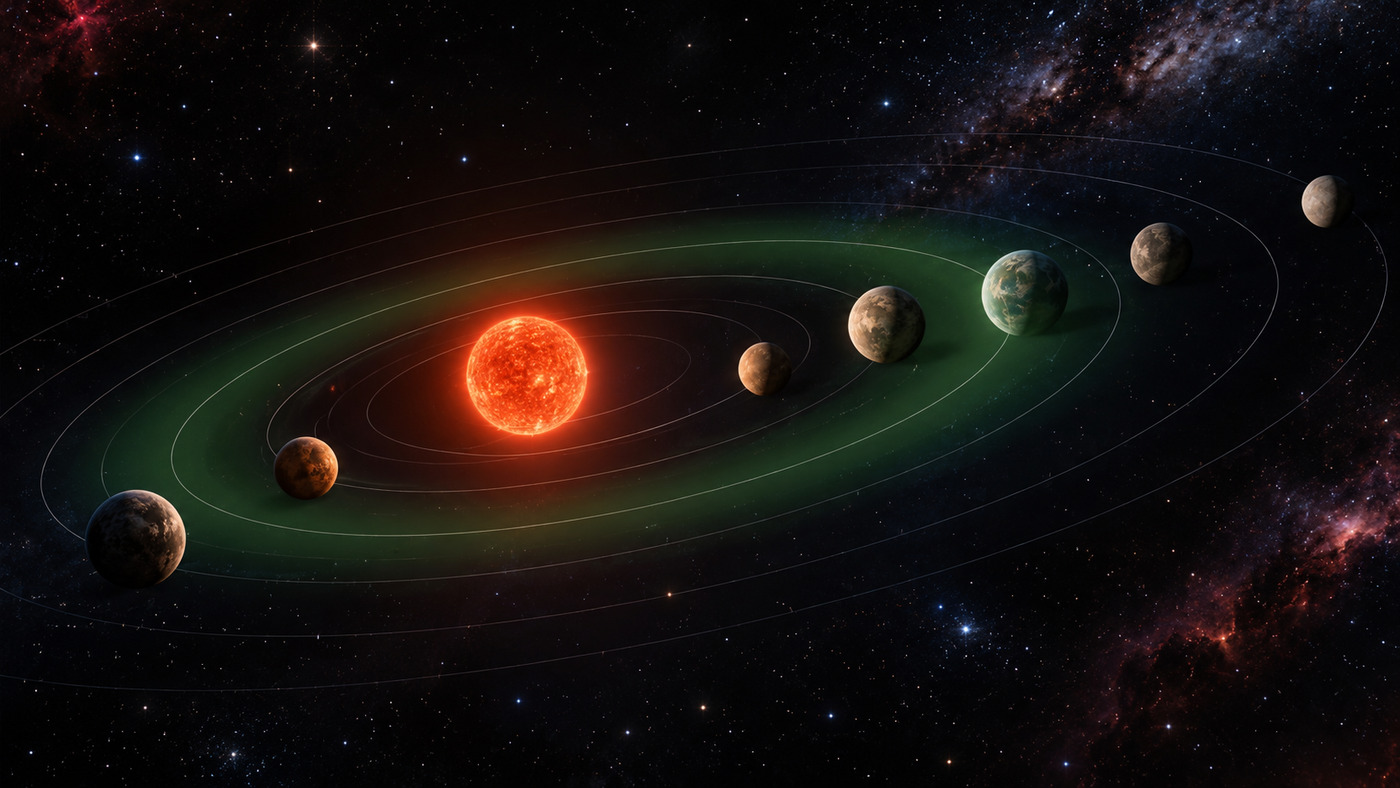
One of the most widely used concepts in exoplanet research is the habitable zone.
This refers to the region around a star where temperatures could allow liquid water to exist on a planet’s surface under suitable atmospheric conditions.
The location of this zone depends largely on the energy emitted by the star.
Around relatively cool stars, the habitable zone is generally closer to the stellar surface.
For hotter, more luminous stars, the region lies farther away.
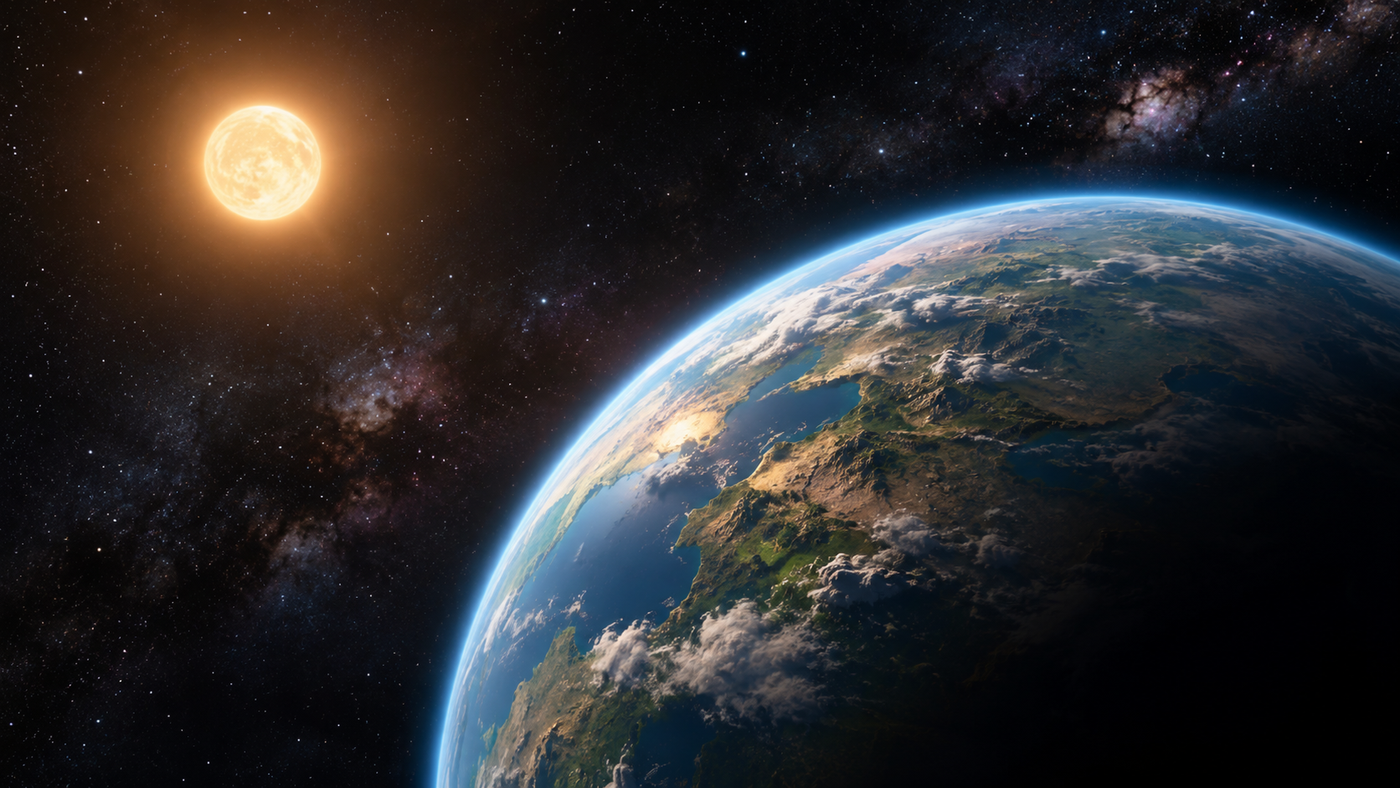
Earth is located within the Sun’s habitable zone, providing one example of a planet where liquid water can exist naturally.
However, distance from a star is only one consideration.
A planet inside the habitable zone may still be unsuitable for life if its atmosphere, pressure, or other environmental conditions are unfavorable.
How Astronomers Discover Distant Planets
Detecting exoplanets presents significant challenges because planets are usually much smaller and dimmer than the stars they orbit.
One widely used technique is the transit method.
When a planet passes in front of its star from Earth’s perspective, it temporarily blocks a small portion of the starlight.
Sensitive instruments can measure this slight reduction in brightness.
By observing repeated transits, astronomers can estimate a planet’s orbital period and size.
Another approach is the radial velocity method, which measures small changes in a star’s motion caused by the gravitational influence of an orbiting planet.
These techniques have enabled scientists to identify thousands of distant worlds that cannot easily be observed directly.
Exploring the TRAPPIST-1 Planetary System
One particularly interesting planetary system is TRAPPIST-1, located approximately 40 light-years from Earth.
The system contains seven known rocky planets with sizes comparable to Earth.
Several orbit within or near the star’s estimated habitable zone, making them important subjects for atmospheric research.
TRAPPIST-1 is a small, cool star, and its planets complete their orbits much faster than Earth travels around the Sun.
Scientists are studying these worlds to understand whether they possess atmospheres capable of supporting suitable surface conditions.
However, the presence and composition of atmospheres remain uncertain for several planets in the system.
The TRAPPIST-1 system demonstrates why discovering a potentially habitable planet is only the beginning of a much longer scientific investigation.
Studying Planetary Atmospheres With Modern Telescopes
One of the most important developments in exoplanet science is the ability to investigate the atmospheres of distant planets.
The James Webb Space Telescope provides powerful instruments for studying light associated with planetary atmospheres.
When a planet passes in front of its star, some starlight may travel through the planet’s atmosphere before reaching a telescope.
Different gases absorb specific wavelengths of light, allowing scientists to investigate atmospheric composition.
Researchers can search for substances such as water vapor, carbon dioxide, and methane.
However, interpreting these measurements requires careful analysis because clouds, atmospheric conditions, and observational limitations can influence the results.
Studying planetary atmospheres helps scientists understand how distant worlds formed and whether their environments might support life.
Searching for Possible Signs of Life
The search for extraterrestrial life involves investigating possible biological indicators known as biosignatures.
These may include particular atmospheric gases or combinations of chemical compounds that could be associated with biological activity.
On Earth, living organisms influence atmospheric composition through processes such as photosynthesis and respiration.
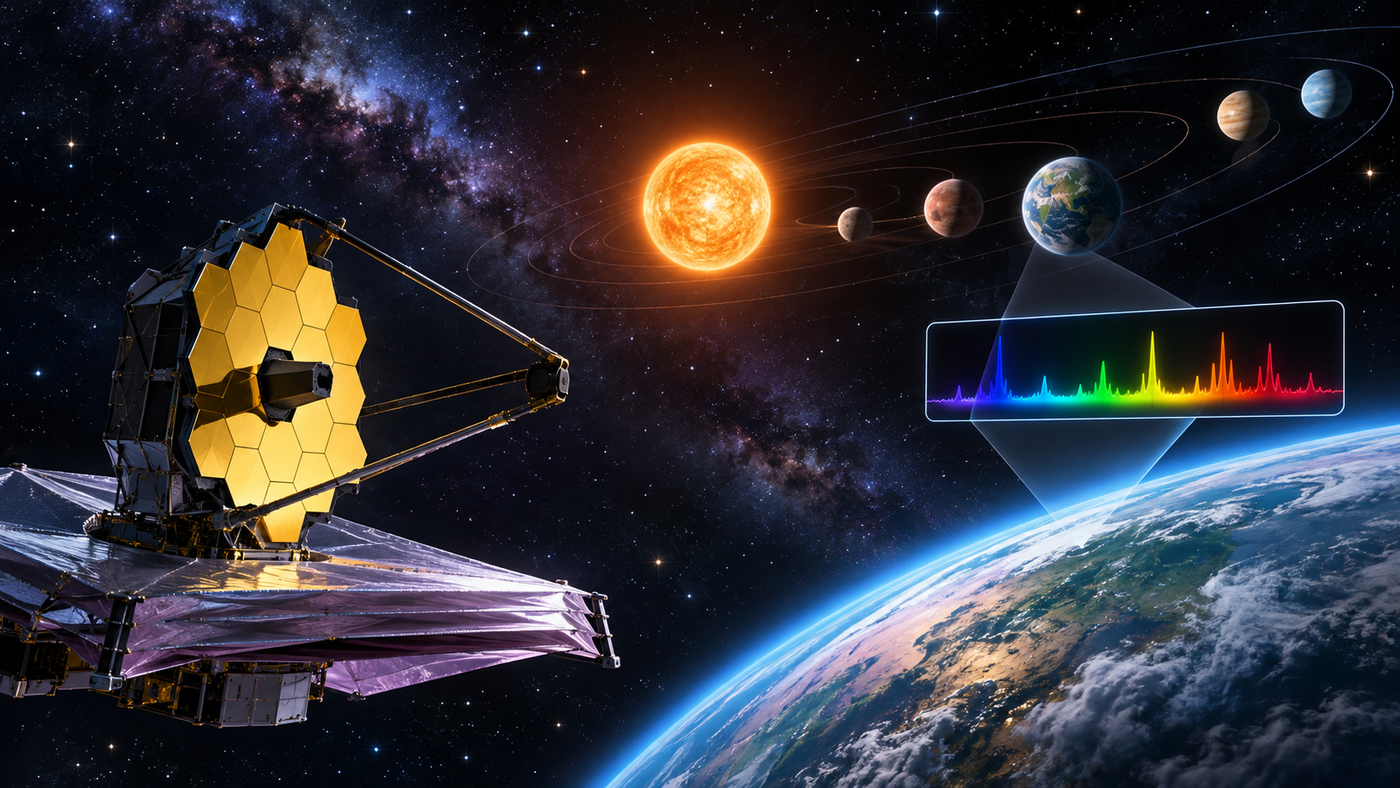
Scientists are investigating whether similar chemical patterns could be detected on distant planets.
However, many chemical substances can also be produced through nonbiological processes.
For this reason, detecting a potentially interesting molecule would not automatically confirm the existence of life.
Researchers must consider geological activity, atmospheric chemistry, stellar radiation, and other explanations before interpreting possible biological signals.
The Challenges of Exploring Distant Worlds
Although telescopes have made remarkable progress, directly studying exoplanets remains extremely difficult.
Even the nearest planetary systems are separated from Earth by enormous distances.
Current spacecraft technologies cannot transport scientific instruments to most of these destinations within practical human timescales.
Astronomers must therefore rely primarily on remote observations.
Another challenge is distinguishing faint planetary signals from the much brighter light emitted by nearby stars.
Advanced instruments, improved data analysis, and longer observation periods are helping researchers overcome some of these limitations.
Future telescopes may provide more detailed information about the surfaces and atmospheres of rocky exoplanets.
The Future of the Search for Habitable Planets
Scientists expect exoplanet research to remain an important part of astronomy for decades.
New observatories and improved detection methods will help researchers identify additional planets and study previously discovered worlds in greater detail.
Future missions may also focus on obtaining direct images of smaller planets orbiting nearby stars.
These observations could improve our understanding of planetary atmospheres, surface environments, and the distribution of potentially habitable worlds.
International cooperation between scientists, universities, and space agencies will continue supporting these ambitious investigations.
Understanding Our Place in the Universe
The search for habitable worlds beyond our solar system represents one of humanity’s most fascinating scientific endeavors.
Every new planetary discovery provides information about how worlds form, evolve, and interact with their parent stars.
Although scientists have not yet confirmed life beyond Earth, research continues to reveal that our solar system is only one example among countless planetary systems.
These discoveries also encourage a deeper appreciation of Earth’s remarkable environment.
By studying distant worlds, scientists gain valuable insights into the conditions that make our own planet suitable for life.
Ultimately, the search for habitable planets is about more than discovering another Earth. It is an effort to understand the diversity of the universe, the conditions necessary for life, and humanity’s place within the vast cosmos.
