
How Traditional Farming Methods Are Finding New Life in Modern Agriculture
Agriculture has changed dramatically over the past century, with modern machinery, advanced irrigation systems, and scientific innovations transforming how food is produced. Yet, as farmers face increasing challenges from climate change, soil degradation, and rising production costs, many are rediscovering agricultural practices that have existed for generations. Traditional farming methods, once considered outdated, are becoming valuable tools for creating more sustainable and resilient food systems.
Across the world, farmers and agricultural researchers are exploring how ancient techniques can complement modern technology. From crop rotation and natural fertilizers to water conservation and traditional seed preservation, these practices offer practical solutions to some of today’s most important agricultural challenges.
Understanding the Value of Traditional Farming
Traditional farming developed through centuries of observation, experimentation, and adaptation to local environments. Long before the invention of modern agricultural machinery, communities learned how to cultivate crops while working with natural ecosystems.
These methods often relied on seasonal weather patterns, soil conditions, biodiversity, and knowledge passed down through generations.
Unlike some intensive agricultural systems that focus primarily on maximizing short-term production, traditional approaches frequently emphasize maintaining soil fertility and protecting natural resources.
Many practices also encourage diversity in farming landscapes, allowing different crops, animals, and vegetation to support one another.
Although traditional methods cannot replace every advantage of modern agriculture, they provide valuable knowledge that can improve long-term environmental sustainability.
Crop Rotation: An Ancient Solution to Soil Health
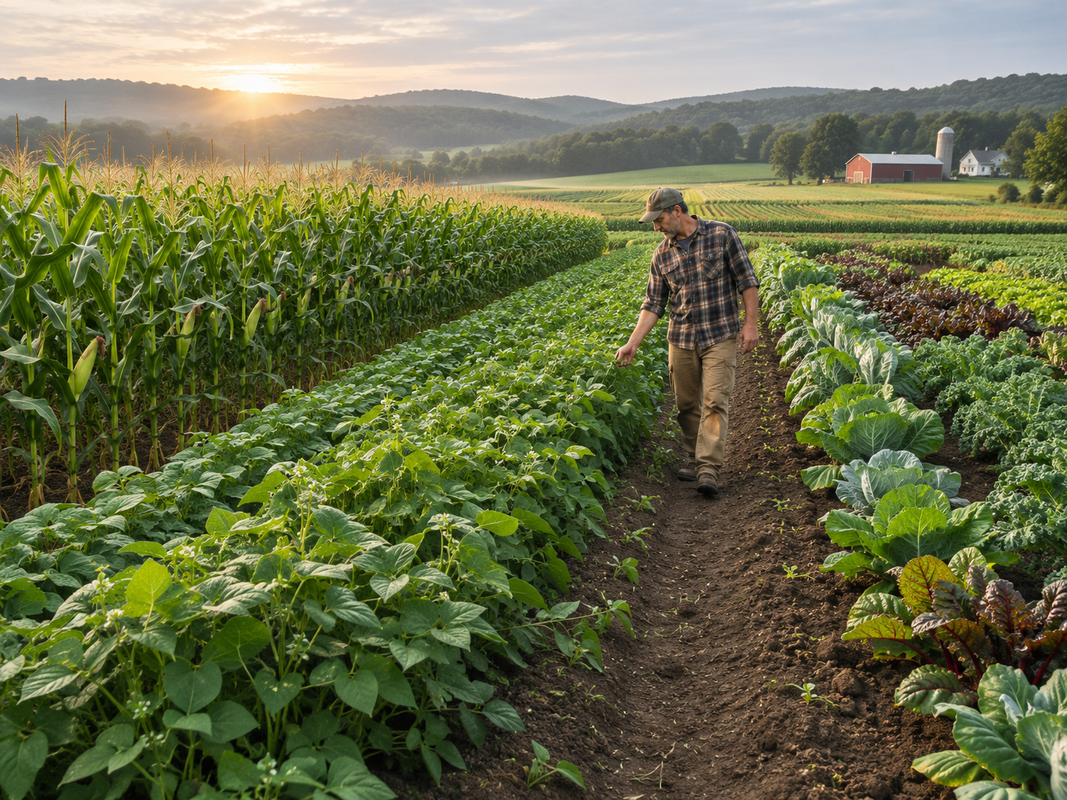
Crop rotation is one of the oldest agricultural practices still widely used today.
Instead of growing the same crop repeatedly in one field, farmers alternate different crops across growing seasons. This approach helps maintain soil fertility, reduce certain pest populations, and prevent the excessive depletion of specific nutrients.
For example, farmers may grow corn during one season and legumes during another.
Leguminous crops, such as beans and peas, can support soil nitrogen levels through their relationship with nitrogen-fixing bacteria.
Crop rotation can also interrupt the life cycles of pests and plant diseases associated with particular crops.
Modern agricultural researchers continue to study crop rotation because of its potential to reduce dependence on synthetic fertilizers and pesticides while maintaining productive farmland.
Natural Fertilizers and the Return of Composting
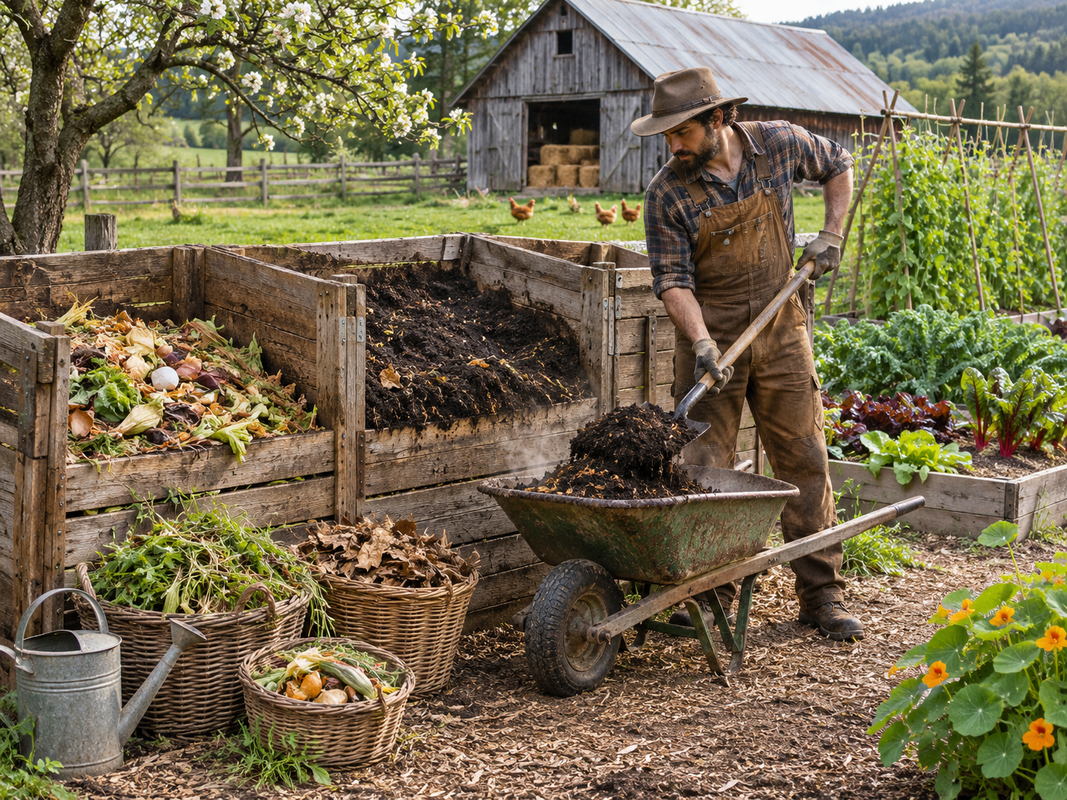
Before the widespread availability of industrial fertilizers, farmers commonly used animal manure, decomposed plant material, and other organic substances to improve soil fertility.
Today, composting is attracting renewed interest as farmers search for environmentally responsible ways to manage agricultural waste.
Compost is produced when organic materials gradually decompose through biological processes.
When properly prepared and applied, compost can improve soil structure, increase its ability to retain moisture, and contribute nutrients essential for plant growth.
It also supports soil organisms that help break down organic matter and maintain healthy growing conditions.
However, compost alone may not meet every crop’s nutritional requirements. Successful agricultural systems often combine organic materials with carefully managed nutrient applications based on soil testing and crop needs.
This balanced approach demonstrates how traditional knowledge and modern scientific methods can work together.
Water Conservation Through Ancient Irrigation Techniques
Water availability is becoming an increasingly important concern for agricultural communities around the world.
While modern irrigation systems offer precise water distribution, traditional methods can provide useful insights into efficient water management.
For centuries, farmers in dry regions developed techniques designed to capture rainfall, reduce evaporation, and direct limited water supplies toward crops.
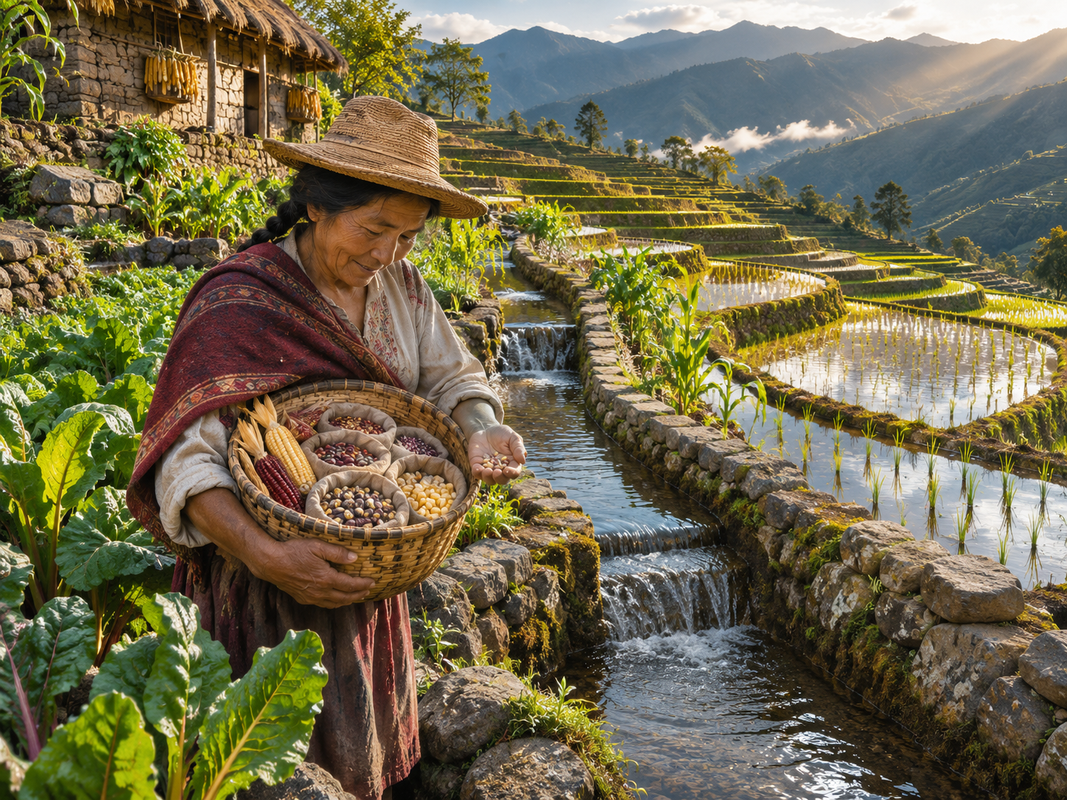
Terraced farming, commonly associated with mountainous regions of Asia and South America, allows farmers to cultivate sloping landscapes while reducing surface runoff and soil erosion.
Other traditional practices include collecting rainwater, using irrigation channels, and applying natural materials to retain soil moisture.
Modern farmers are adapting these ideas alongside technologies such as drip irrigation, moisture sensors, and automated water management systems.
Combining established conservation practices with modern monitoring tools can help agricultural producers use water more efficiently.
Preserving Traditional Seeds and Crop Diversity
Another important aspect of traditional agriculture is the preservation of locally adapted crop varieties.
For generations, farming communities saved seeds from successful harvests and selected plants that performed well under local environmental conditions.
Over time, these practices helped develop crop varieties with distinctive characteristics, including adaptation to particular climates, soils, and growing seasons.
Today, agricultural scientists recognize the importance of protecting genetic diversity within food crops.
Traditional seed varieties may contain traits that could contribute to future breeding programs, including resistance to certain diseases or tolerance of environmental stress.
Seed banks, community seed exchanges, and agricultural conservation programs help preserve this valuable genetic heritage.
Maintaining crop diversity is particularly important as changing climate conditions create new challenges for food production.
Integrating Traditional Knowledge With Modern Technology
The future of agriculture does not necessarily require choosing between traditional practices and technological innovation.
Instead, many researchers and farmers are exploring ways to combine the strengths of both approaches.
Satellite imagery, soil sensors, and digital agricultural platforms can help farmers understand field conditions and make more informed decisions.
At the same time, practices such as crop rotation, intercropping, composting, and soil conservation can contribute to healthier agricultural ecosystems.
For example, a farmer might use modern soil testing to determine nutrient requirements while relying on compost and carefully planned crop rotations to improve long-term soil health.
Similarly, traditional water conservation techniques can be supported by automated irrigation systems that deliver water according to crop requirements.
These combinations demonstrate that agricultural innovation can involve rediscovering established methods rather than replacing them entirely.
Building a More Sustainable Agricultural Future
As global food demand continues to grow, agriculture must balance productivity with environmental responsibility.
Traditional farming methods offer important lessons about adapting to local conditions, conserving natural resources, and maintaining productive land across generations.
However, their effectiveness depends on factors such as climate, soil quality, crop selection, labor availability, and farm size.
No single agricultural method can solve every challenge facing modern food production.
A sustainable future will likely depend on combining scientific research, appropriate technology, and practical knowledge developed by farming communities over centuries.
By recognizing the value of both innovation and tradition, farmers can build agricultural systems that are more adaptable, resource-efficient, and environmentally responsible.
The renewed interest in traditional farming reflects an important realization: progress does not always mean abandoning the past. Sometimes, the knowledge needed to shape a better future has been growing in our fields for generations.
