
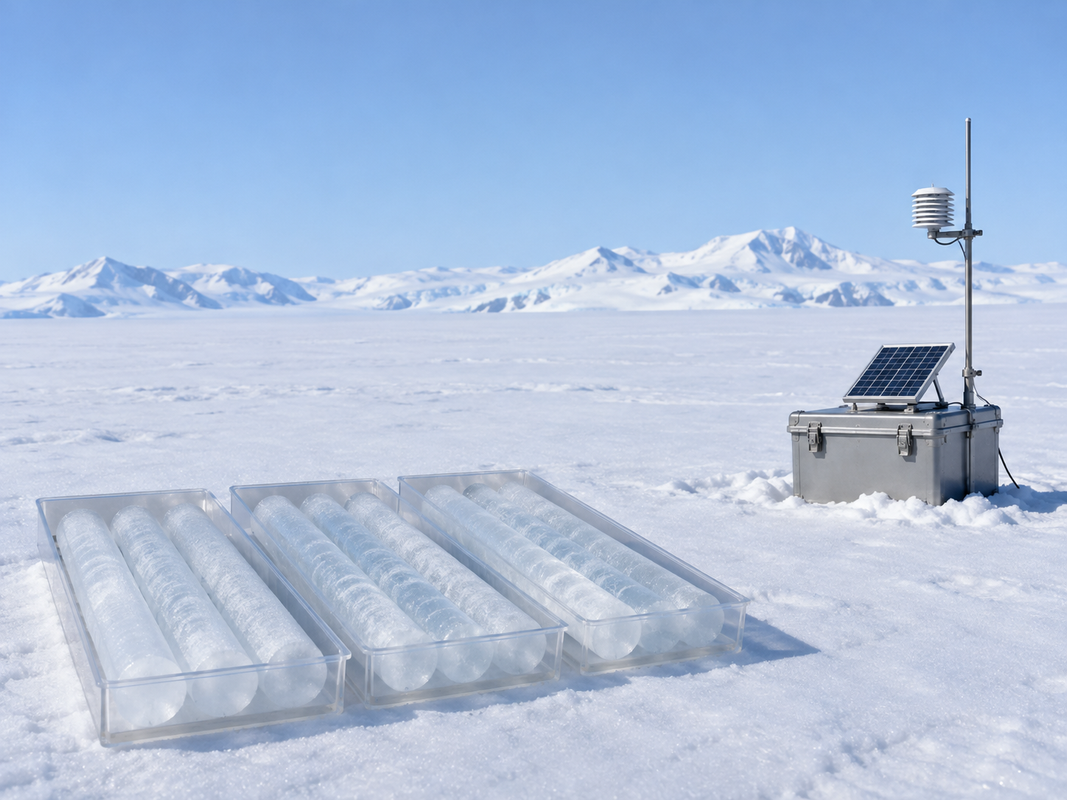
Antarctica is one of the most remote and fascinating places on Earth. Covered by an enormous ice sheet that has developed over millions of years, the continent contains a remarkable record of our planet’s environmental history. Beneath its frozen surface lie ancient landscapes, hidden lakes, mountain ranges, and possibly biological communities that scientists are only beginning to understand.
For decades, researchers have traveled to Antarctica to investigate what exists beneath its thick layers of ice. Using advanced drilling equipment, radar technology, and scientific instruments, they are uncovering valuable information about Earth’s past climate, geological history, and the remarkable ability of life to survive in extreme environments.
A Continent Hiding an Ancient World
Antarctica contains approximately 90 percent of the world’s ice and holds most of Earth’s fresh water in frozen form.
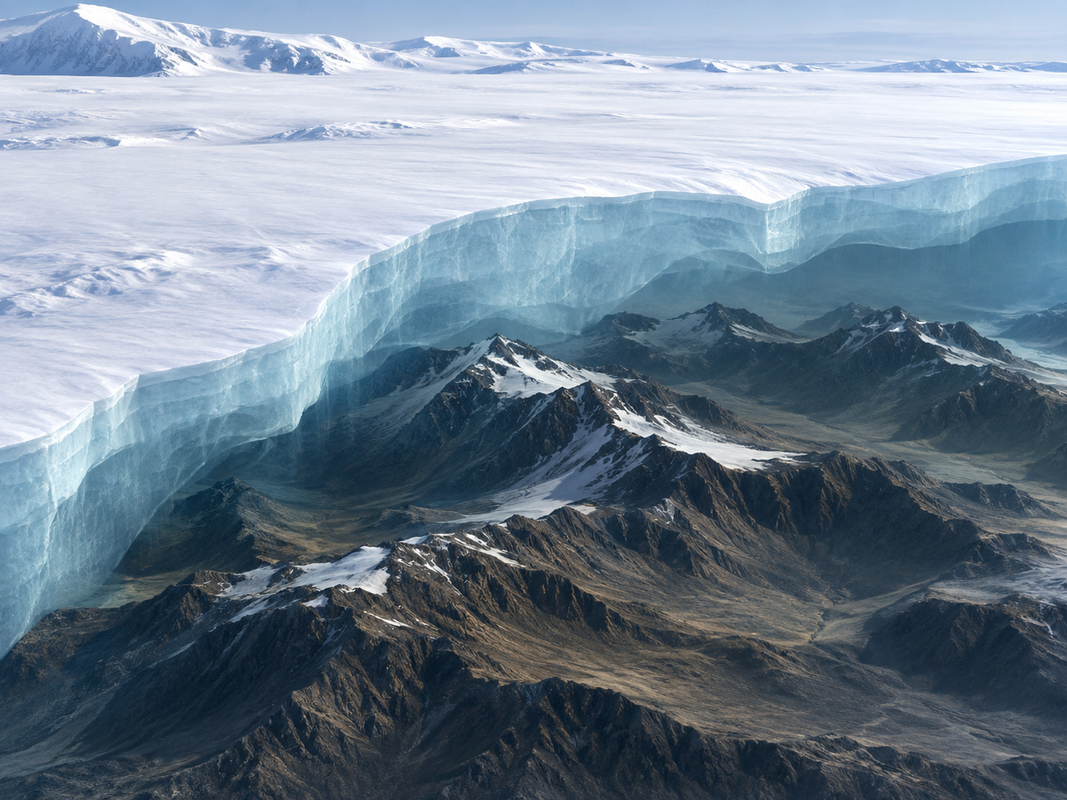
In some regions, the ice sheet reaches thicknesses of several kilometers, concealing a complex landscape of mountains, valleys, lakes, and ancient river systems.
Although the continent appears largely featureless from certain surface viewpoints, its underlying geography is remarkably diverse.
Scientists use radar measurements, satellite observations, and seismic surveys to investigate these hidden formations without removing enormous quantities of ice.
These technologies reveal how Antarctica’s landscape developed and how its ice sheet interacts with the underlying bedrock.
Understanding these processes is important because the shape of the land beneath the ice influences how glaciers move and how the continent responds to environmental changes.
Ancient Ice as a Record of Earth’s Climate
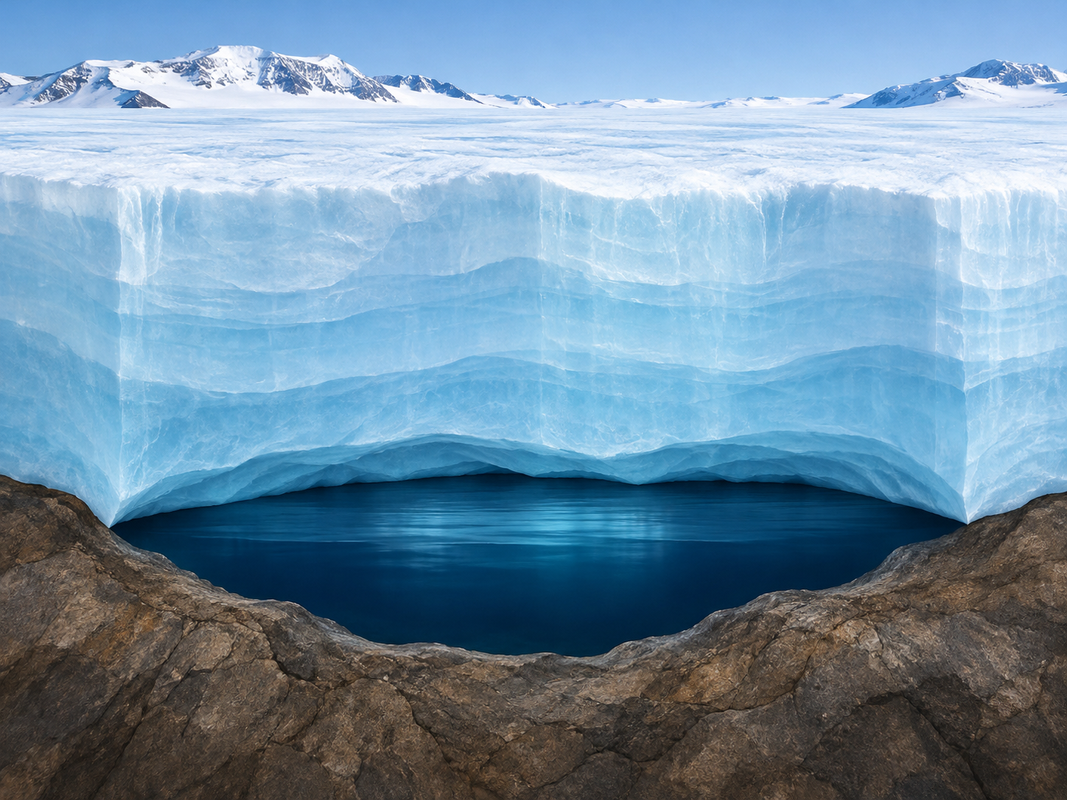
One of Antarctica’s greatest scientific resources is the ancient ice itself.
Snow accumulating on the continent gradually becomes compressed into layers of ice. During this process, tiny bubbles of atmospheric gases can become trapped within the frozen material.
These bubbles provide scientists with direct samples of ancient air.
By extracting long cylinders of ice called ice cores, researchers can examine past concentrations of gases such as carbon dioxide and methane.
Chemical measurements and variations in the ice also provide information about historical temperatures, snowfall patterns, and volcanic activity.
Some Antarctic ice cores preserve climate records extending back hundreds of thousands of years.
International research projects have reached ice estimated to be more than 1.2 million years old, opening opportunities to investigate periods of Earth’s climate history that were previously difficult to study directly.
The Search for Hidden Lakes Beneath the Ice
One of the most surprising discoveries in Antarctica is the existence of liquid water beneath its frozen surface.
Scientists have identified hundreds of subglacial lakes located beneath thick layers of ice.
These lakes remain liquid because of a combination of pressure, geothermal heat, and insulating ice.
Lake Vostok, located beneath East Antarctica, is among the largest and best-known examples.
The lake lies beneath approximately four kilometers of ice and has attracted considerable scientific interest because of its unusual environment.
Researchers hope that studying these hidden bodies of water will improve their understanding of subglacial ecosystems, water circulation, and the geological processes occurring beneath the continent.
Some lakes may exchange water through interconnected drainage systems, influencing the movement of glaciers above them.
Could Life Exist Beneath Antarctica’s Ice?
The possibility of life beneath Antarctica’s ice is an important subject of scientific investigation.
Although these environments lack sunlight, some microorganisms can survive by obtaining energy through chemical processes rather than photosynthesis.
Researchers studying subglacial Lake Whillans in West Antarctica have identified active microbial communities beneath hundreds of meters of ice.
These discoveries demonstrate that life can exist in environments once considered extremely difficult to inhabit.
Scientists are interested in understanding how these organisms obtain nutrients, reproduce, and adapt to conditions involving darkness, low temperatures, and limited resources.
Studying these communities may also provide insights into the possibility of life in icy environments elsewhere in the solar system.
However, exploration must be carefully managed to prevent contamination of environments that may have remained isolated for exceptionally long periods.
Discovering Mountains and Ancient Landscapes
Beneath Antarctica’s ice sheet are mountain ranges that would be impressive even if they were located on an ice-free continent.
The Gamburtsev Subglacial Mountains, hidden beneath East Antarctica, are among the most remarkable examples.
Their rugged landscape includes peaks and valleys concealed beneath thick ice.
Scientists continue investigating how these mountains formed and why their distinctive shapes have been preserved.
Other studies examine ancient river valleys and geological formations that provide clues about Antarctica’s environment before extensive glaciation.
Millions of years ago, parts of Antarctica supported very different climatic conditions, including vegetation and ecosystems that could not survive across much of the continent today.
Understanding this geological history helps researchers reconstruct how the Antarctic environment changed over immense periods.
How Scientists Explore Beneath the Frozen Surface
Scientific exploration in Antarctica requires specialized technology capable of operating under extreme conditions.
Ice-core drilling systems allow researchers to collect samples from deep within the ice sheet.
Radar instruments transmit signals through ice to identify underlying geological structures and possible water bodies.
Satellite measurements help scientists monitor changes in ice elevation and movement across large geographical areas.
In some research projects, scientists use carefully controlled hot-water drilling techniques to reach subglacial environments.
Water samples and sediments collected during these expeditions can reveal important biological and chemical information.
Because Antarctic conditions are extremely challenging, field research requires extensive preparation, specialized equipment, and international cooperation.
What Antarctica Can Teach Us About Climate Change
Antarctica plays a major role in Earth’s climate system.
Its enormous ice sheet influences global sea levels, while surrounding ocean waters contribute to the circulation of heat around the planet.
Scientists study Antarctic ice to understand how Earth’s climate responded to natural changes in greenhouse gases, temperatures, and atmospheric circulation.
Ancient ice records provide a valuable perspective on climate changes occurring over thousands of years.
They also help researchers evaluate climate models used to investigate possible future environmental conditions.
Understanding how Antarctic ice sheets behaved during warmer periods of Earth’s history is especially important for estimating potential contributions to future sea-level rise.
The Future of Antarctic Exploration
Despite decades of research, many questions about Antarctica remain unanswered.
Scientists continue searching for older ice records, investigating hidden water systems, and exploring the geological landscapes beneath the continent.
Advances in remote sensing, autonomous equipment, and laboratory analysis are making it possible to study these environments with increasing precision.
Future discoveries may reveal additional microbial ecosystems, improve our understanding of ancient atmospheric conditions, and provide new information about the development of Earth’s polar regions.
International collaboration will remain essential because Antarctic research involves substantial logistical, financial, and environmental challenges.
Unlocking the Secrets of Earth’s Frozen Continent
Antarctica’s ancient ice contains far more than frozen water.
It preserves evidence of past climates, protects hidden landscapes, and conceals environments that continue to challenge scientific understanding.
From microscopic organisms surviving without sunlight to atmospheric records extending back more than a million years, the continent offers extraordinary opportunities for discovery.
As technology advances, scientists will continue investigating the mysteries beneath Antarctica’s frozen surface.
Each new discovery contributes to a broader understanding of Earth’s history, the adaptability of living organisms, and the environmental processes shaping our planet.
Ultimately, exploring Antarctica reminds us that some of the world’s most important scientific discoveries may still be waiting beneath places that appear silent, empty, and permanently frozen.
